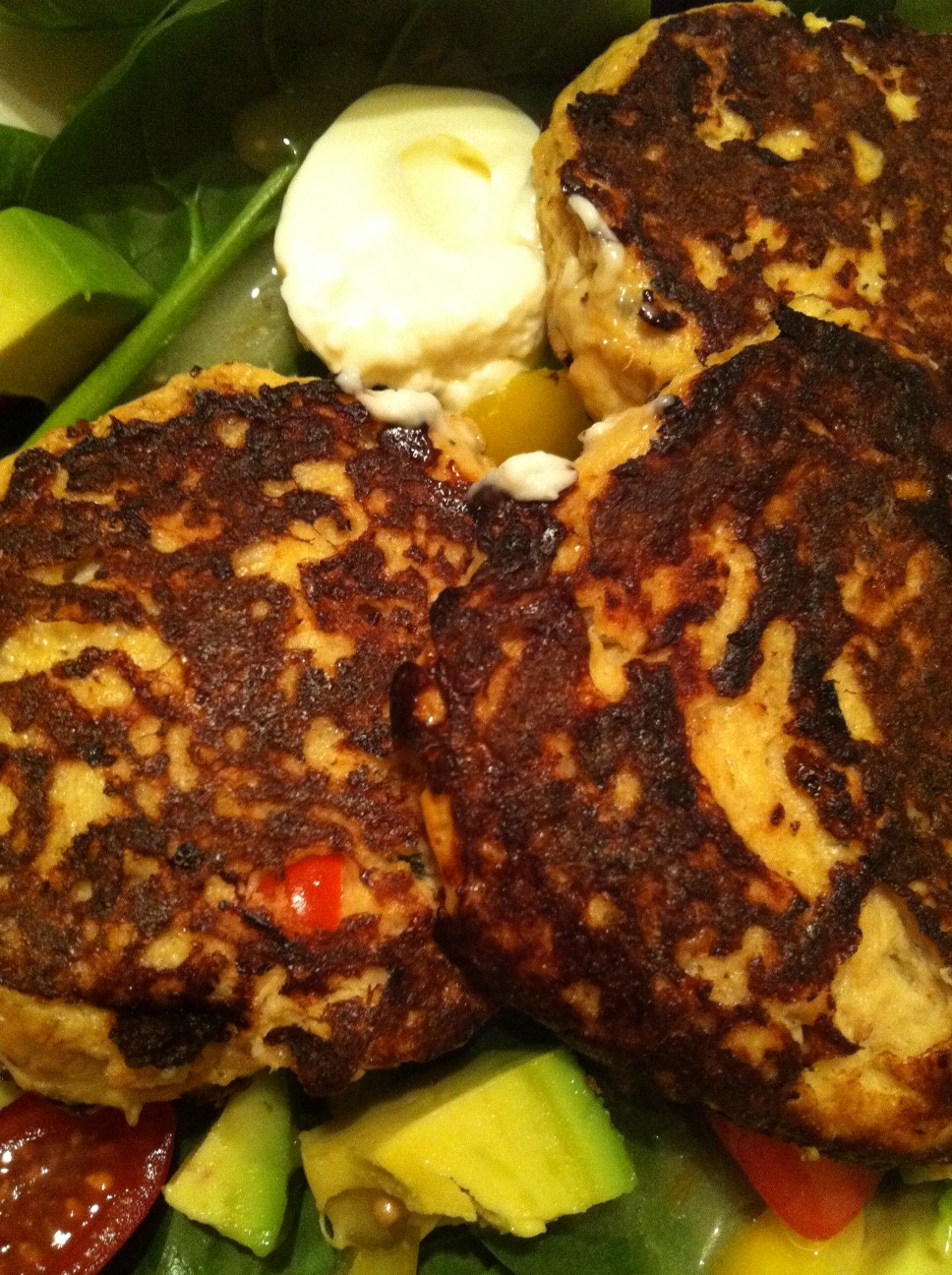
salmon fishcakes

When was the last time you made fishcakes?

As it nears the end of January, the health kick you started at the beginning of the year starts to lose its sheen and you begin to wonder if you can actually go to jail for clobbering that pizza-munching individual over the head with a cucumber and nicking off with a slice of Meatlovers.

If I was on the jury, I just might acquit you.

Not many people have a vast repertoire of healthy meals they routinely prepare, but I don’t think that’s because we don’t know how to make them. I think it’s just because we often forget how many things we can cook. Sometimes all it takes is seeing someone else making a dish to make us remember that we already know how to make it, that we too can reach the heights of healthy culinary brilliance.

So here’s a little reminder from the tiny kitchen that fishcakes are easy, light, delicious and nutritious. I’ve made these without potato because this month I’m trying to go easy on the carbs, but the cauliflower mash I made last night has substituted nicely. They are a little difficult to flip in the pan because of it, but they taste absolutely scrummy.

Low-carb salmon fishcakes – makes 12
Half an onion, very finely chopped
415g salmon
1 egg
1 cup cauliflower mash
Handful grated cheddar
Salt and pepper

Incredibly, the majority of the work is done as soon as you’ve prepped the ingredients. Simply combine everything in a large bowl and work through to form a sticky, lumpy paste. If it’s too dry, add some milk or another egg. If it’s a little too wet, it should dry out a bit when you place it in the fridge.

Fishcake mixture.
Refrigerate the mixture to help it set.

You’ll need to refrigerate for at least half an hour, then take it out and form into patties. Fry in a little oil for about five minutes on the first side, and flip very carefully – they’ll be difficult to flip, but you can do it with two spatulas.
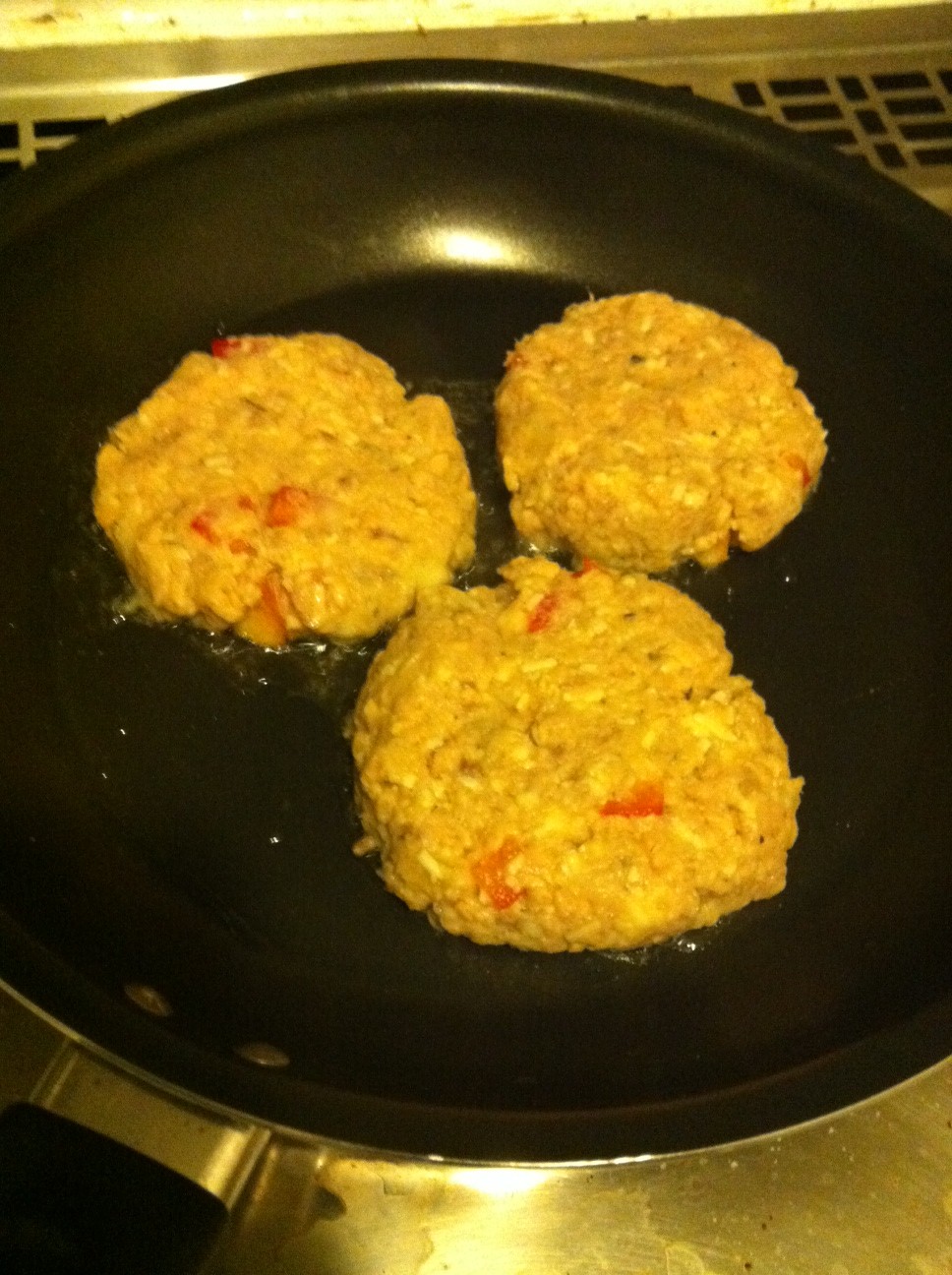
The smell of these frying is incredible.
These are a one-turn job. Make sure you don’t try to flip them too early!

Serve with lemon, a dab of mayonnaise and a large salad.
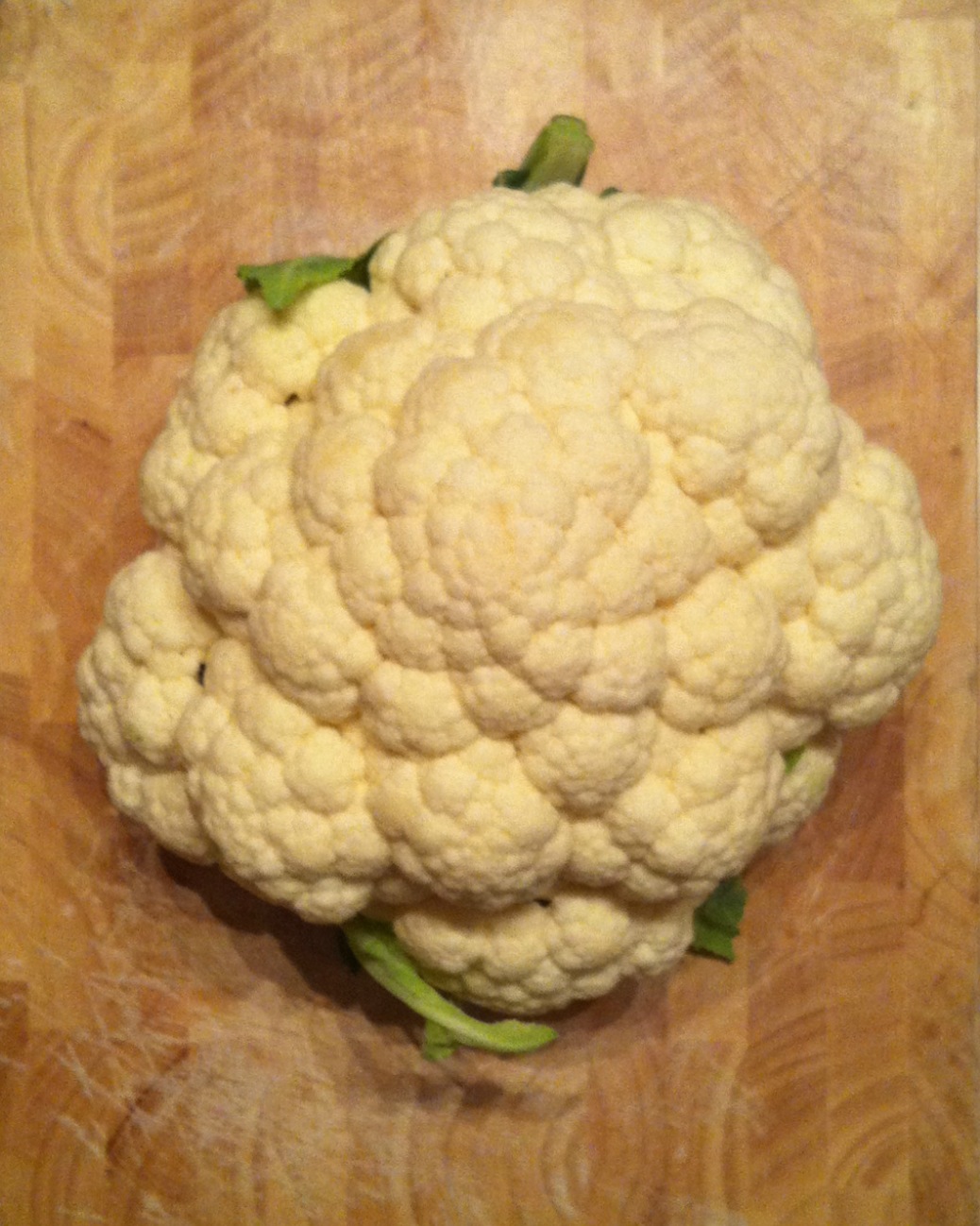
cauliflower mash

The ‘before’ picture.

Don’t worry, I haven’t completely lost the plot. I know this is a perfectly ordinary cauliflower sitting here and I know I might be cheating ever-so-slightly by giving you a recipe for essentially taking it and turning it into mush. But it is nevertheless a staple in this tiny kitchen, and it’s hard to get right, so here goes.

Cauliflower mash
1 large head of cauliflower

Cut the cauliflower into pieces. One of the best things about this is that since the cauliflower is going to be mashed, you don’t need to waste time agonising over cutting the thing into florets of the same size so they’ll cook at the same speed (does anyone else do that, or is it just me?).

Boil the cauliflower in a large saucepan. Normally, you’d try to take cauliflower to a stage of perfect toothsomeness, just the same way you’re searching for al dente pasta. For mash, you want to take it beyond that point, to where a fork can split the floret with a touch.

Drain the cauliflower and return it to the saucepan. Roll up your sleeves, grab the potato masher, and work through the frustrations of the day.

If you were to serve it now, it would be tasty, but wet and sloppy. Since I often use this as a substitute for potato, I prefer a lighter, fluffier mash. What you want to do is remove the liquid that has come out of the cauliflower, and the best way to do this is by evaporation. Draining, sadly, won’t cut it.

Once you’ve mashed the cauliflower, return it to the stove and place over a low heat. You need to leave it steaming gently over the stove for a good ten minutes. You don’t really need to worry about looking after it – cauliflower shouldn’t burn or stick to the pan – but give it a stir every now and then to check how much liquid is left. The end result should be light and fluffy, ready for use as a delicious alternative to mashed potato.

And… after.


*If you’re looking for a variation that holds together better and has the consistency of mash, try this gourmet cauliflower mash.

not tabouleh

THIS IS NOT TABOULEH.

I’ve got to say that before all my Lebanese friends come after me, pelting me with falafels (which I maybe wouldn’t mind as much as I should). Real tabouleh is made with parsley, bulgur wheat, lemon juice, spring onion and mint. Calling this tabouleh would be like saying sushi is Chinese because it’s made with rice. Big no-no.

But as potentially culturally offensive as this little salad is, the ingredients were what I had in the fridge when I came home at about 8pm after a day of hardcore shopping and I certainly was not about to traipse out to get anything else. I very nearly reached for the pasta and sauce, but I didn’t, and I’m glad. This dish tastes wonderful – zingy and fresh and healthy – so I’m going to post it here for you to enjoy under the proviso that you all understand that calling it tabouleh would be a mistake, a misrepresentation, an egregious error.

The Not-Tabouleh Salad
Bunch of parsley, chopped
Two tomatoes, finely chopped
Quarter of a red onion, very finely chopped
3 tbsp of couscous
Juice of one lime
Olive oil

Parsley is wonderfully springy and robust, but the key is to get it as dry as humanly possible before chopping it, otherwise it ends up in a soggy mess. You can just use paper towels to pat the leaves after you’ve washed it. I know people who use a salad spinner to get it really dry before chopping it, which is great but a little Mission Impossible for the small kitchen.

When chopping parsley, grab the stalks and chop from the leaves down. Get it right the first time because the ‘running the knife through again’ technique that I often use to make things are properly chopped doesn’t really fly with parsley – you can end up bruising the leaves and they get soggy. In any case, don’t fret if there are one or two leaves sticking out at the end. Make sure you’ve chopped enough that the parsley salad is really about the parsley, not the couscous.

Combine the parsley, couscous, tomato and onion (I’m not wild about raw onion, so I only used a quarter, but use your judgement). I don’t like lashings of olive oil dripping everywhere so I used just the tiniest drizzle and then squeezed the lime juice over. Mix well and serve by itself, or with romaine lettuce leaves.

I may have also helped myself to the world’s largest scoop of hummus. Why not?

simple salsa

Those of you who are quick on the uptake (or just really passionate about food) have probably spotted the glaring problem with the photo on my guacamole entry.
Salsa, of course! It’s not there!

I had committed the culinary equivalent of placing Romeo without Juliet, Mickey without Minnie, Abelard without Heloise (although she would have been much better off without him, in my opinion). I don’t quite know how it happened, but let’s just say that I was overcome with the excitement of learning how to make guacamole that I simply forgot about the unbroken pact between guac and salsa.

I’m going to rectify that now, because trying to have a Mexican meal without salsa just isn’t right. I won’t allow it.

Salsa
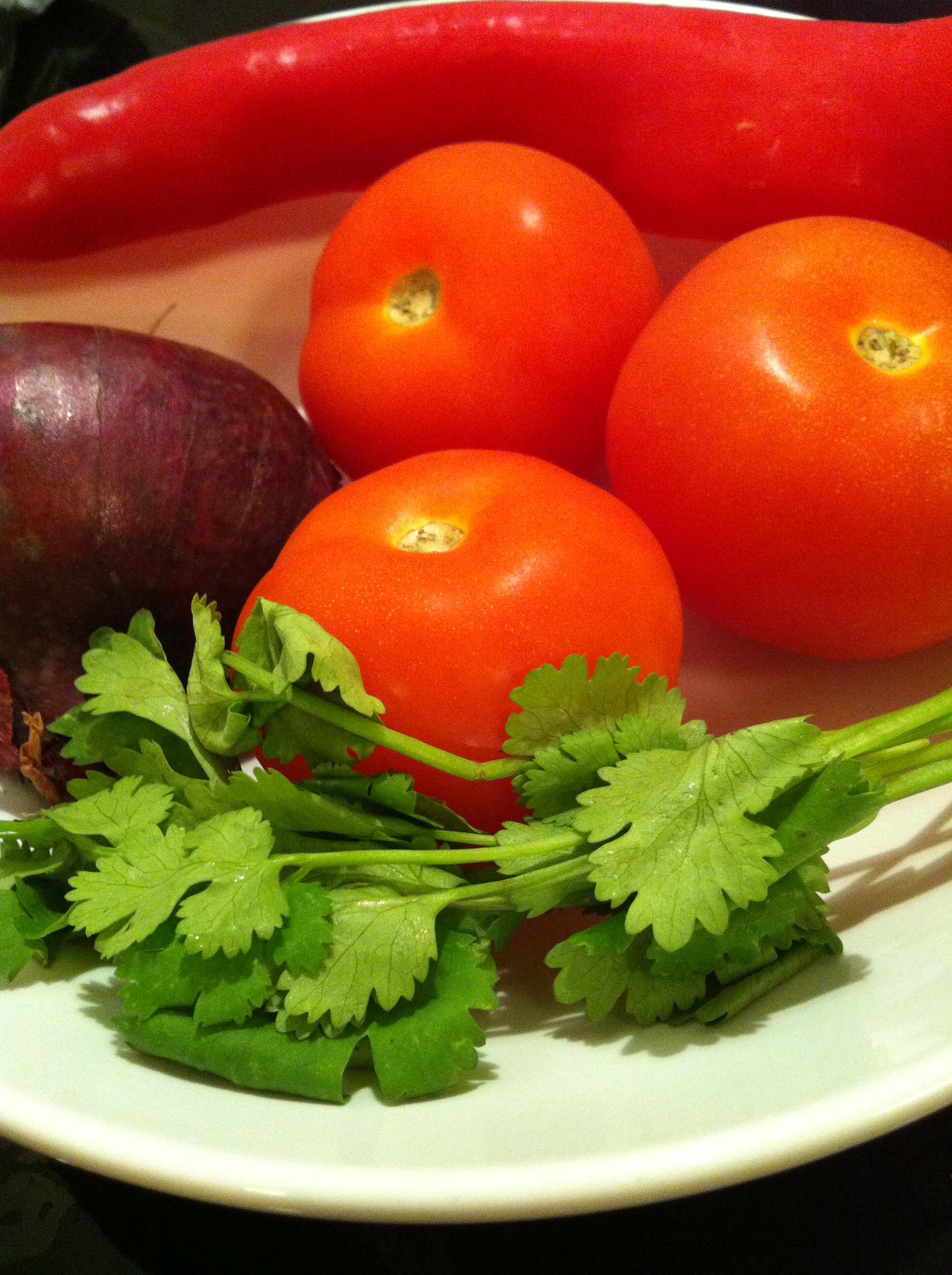
3 tomatoes
Quarter of an onion
One deseeded chilli
Small handful of fresh coriander
Salt
Squeeze of lime juice

Finely chop the tomatoes, onion, chilli and coriander. Combine in a bowl and add salt and lime juice to taste. Nothing simpler!