As it nears the end of January, the health kick you started at the beginning of the year starts to lose its sheen and you begin to wonder if you can actually go to jail for clobbering that pizza-munching individual over the head with a cucumber and nicking off with a slice of Meatlovers.
If I was on the jury, I just might acquit you.
Not many people have a vast repertoire of healthy meals they routinely prepare, but I don’t think that’s because we don’t know how to make them. I think it’s just because we often forget how many things we can cook. Sometimes all it takes is seeing someone else making a dish to make us remember that we already know how to make it, that we too can reach the heights of healthy culinary brilliance.
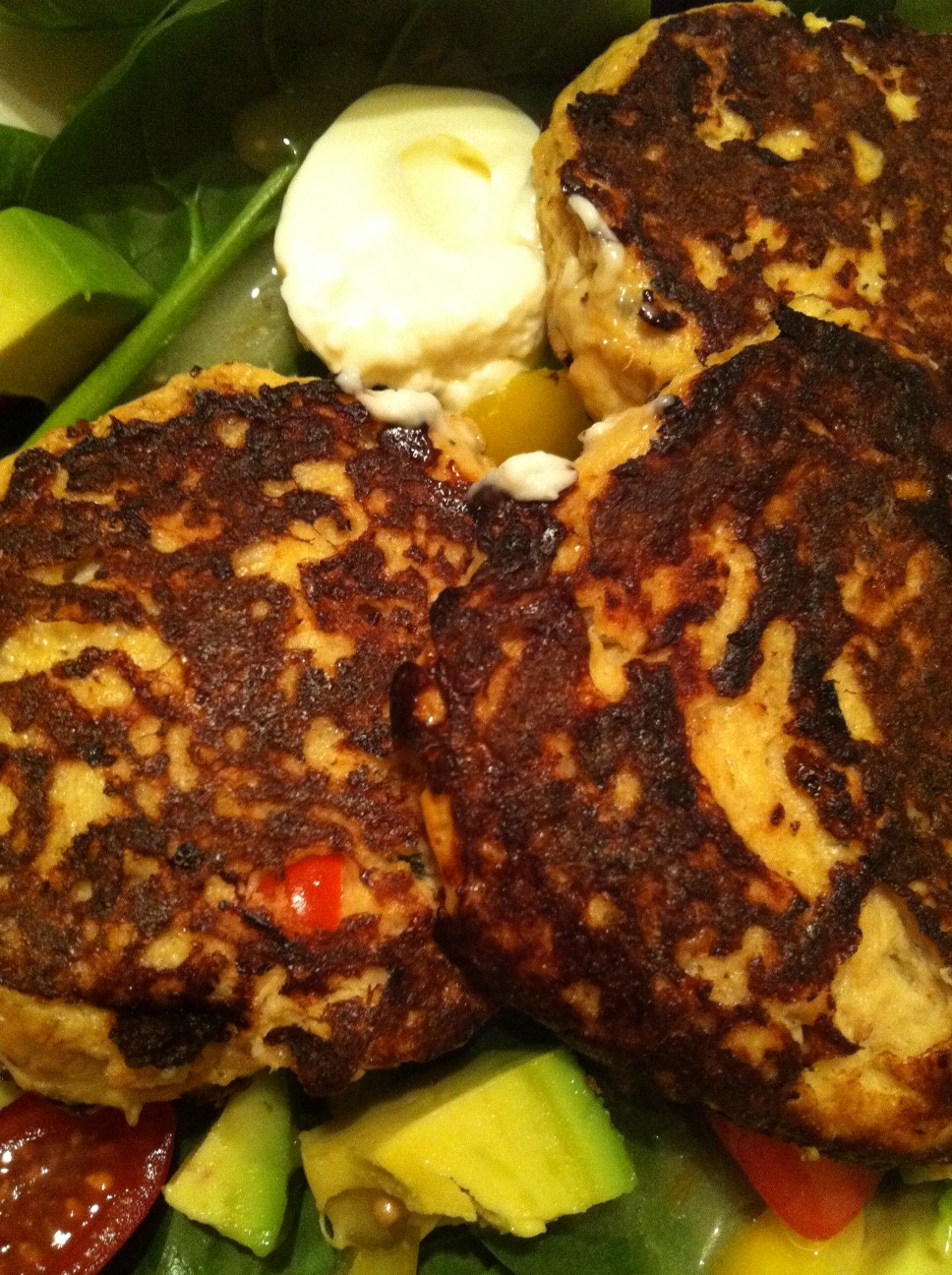
So here’s a little reminder from the tiny kitchen that fishcakes are easy, light, delicious and nutritious. I’ve made these without potato because this month I’m trying to go easy on the carbs, but the cauliflower mash I made last night has substituted nicely. They are a little difficult to flip in the pan because of it, but they taste absolutely scrummy.
Low-carb salmon fishcakes – makes 12
Half an onion, very finely chopped
415g salmon
1 egg
1 cup cauliflower mash
Handful grated cheddar
Salt and pepper
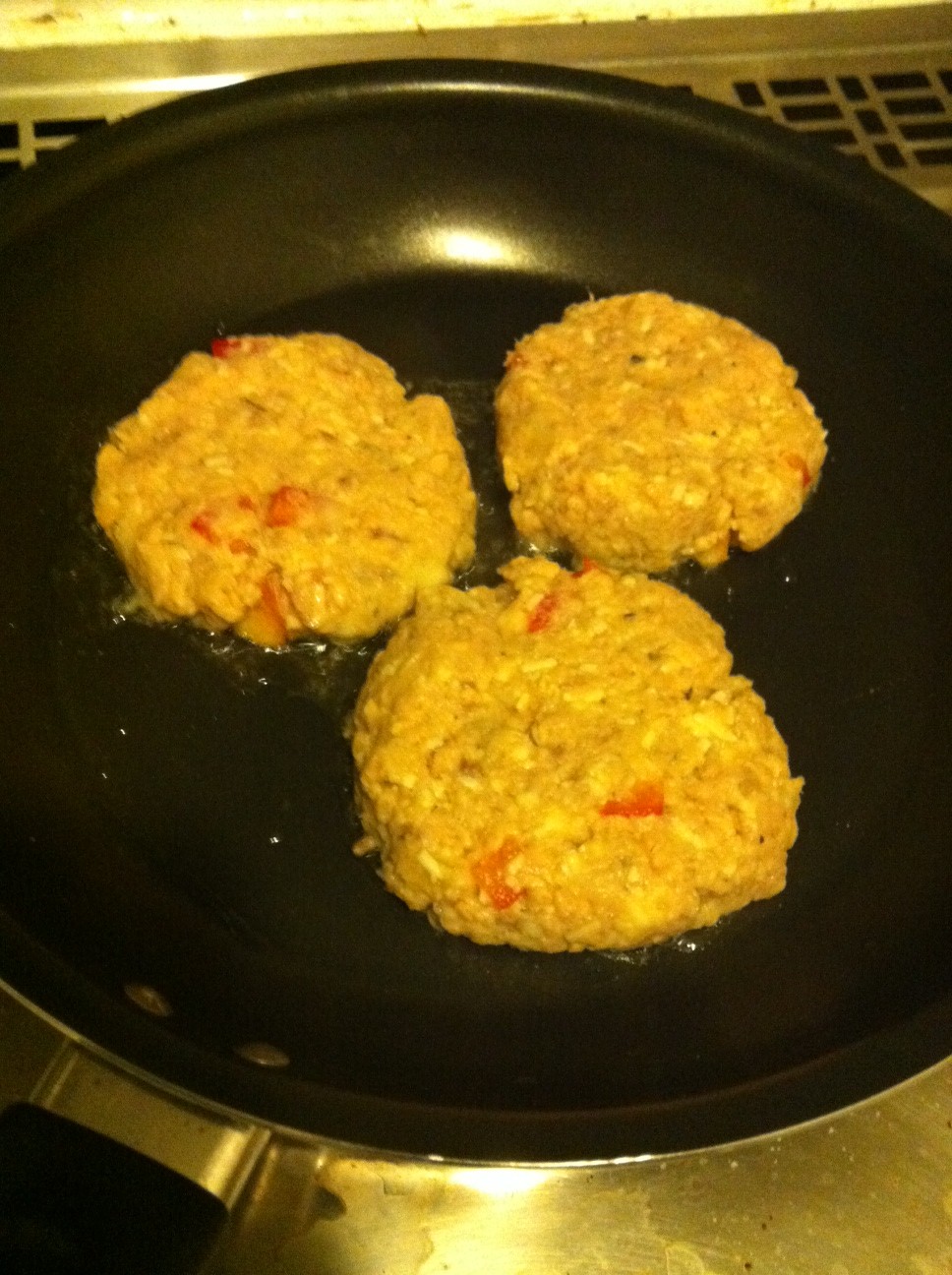
Incredibly, the majority of the work is done as soon as you’ve prepped the ingredients. Simply combine everything in a large bowl and work through to form a sticky, lumpy paste. If it’s too dry, add some milk or another egg. If it’s a little too wet, it should dry out a bit when you place it in the fridge.
Refrigerate the mixture to help it set.
You’ll need to refrigerate for at least half an hour, then take it out and form into patties. Fry in a little oil for about five minutes on the first side, and flip very carefully – they’ll be difficult to flip, but you can do it with two spatulas.
These are a one-turn job. Make sure you don’t try to flip them too early!
Serve with lemon, a dab of mayonnaise and a large salad.
Suddenly, post-Christmas penance doesn’t seem so bad.
Well! Where on earth have I been?
You know how it is over Christmas. There’s the huge leadup where you embrace the Christmas spirit and try to push people out of the way when you’re buying presents on Oxford St, then there are the alcohol-soaked Christmas parties, then (if your family is anything like my boyfriend’s) there are days and days of being fed turkey and ham and potatoes and chocolate biscuits until you feel you might as well hop into the oven and roast alongside the bird. Ain’t it glorious?
Then, inevitably, comes the period of self-recrimination where you realise that you maybe ate one or fifteen too many Roses. The new year begins. And so does the diet.
Salads are fantastic because they’re healthy, quick and no-fuss. The trouble is, when you’re eating a salad you always, always know about it. It goes from making you feel virtuous and elated at how good you’re being to your body to making you feel depressed and like you’d kill a small puppy for a plate of pasta. Trust me, I know.
The trick is to use fresh ingredients and keep it interesting. I am not a fan of bitter leaves, although I know lots of people who think they provide a nice contrast in a salad (actually, I’m not a fan of bitter flavours, full stop). But each to their own.
I confess that the inspiration for this salad came from a recent purchase of a non-stick frypan which is actually non-stick. I don’t know how I’ve been getting along without it. Do you know how liberating it is to cook without knowing you’ll need to soak the burnt pans overnight again? Really, if I’d known how ridiculously happy it would make me I would have spent the £2.99 a long time ago.
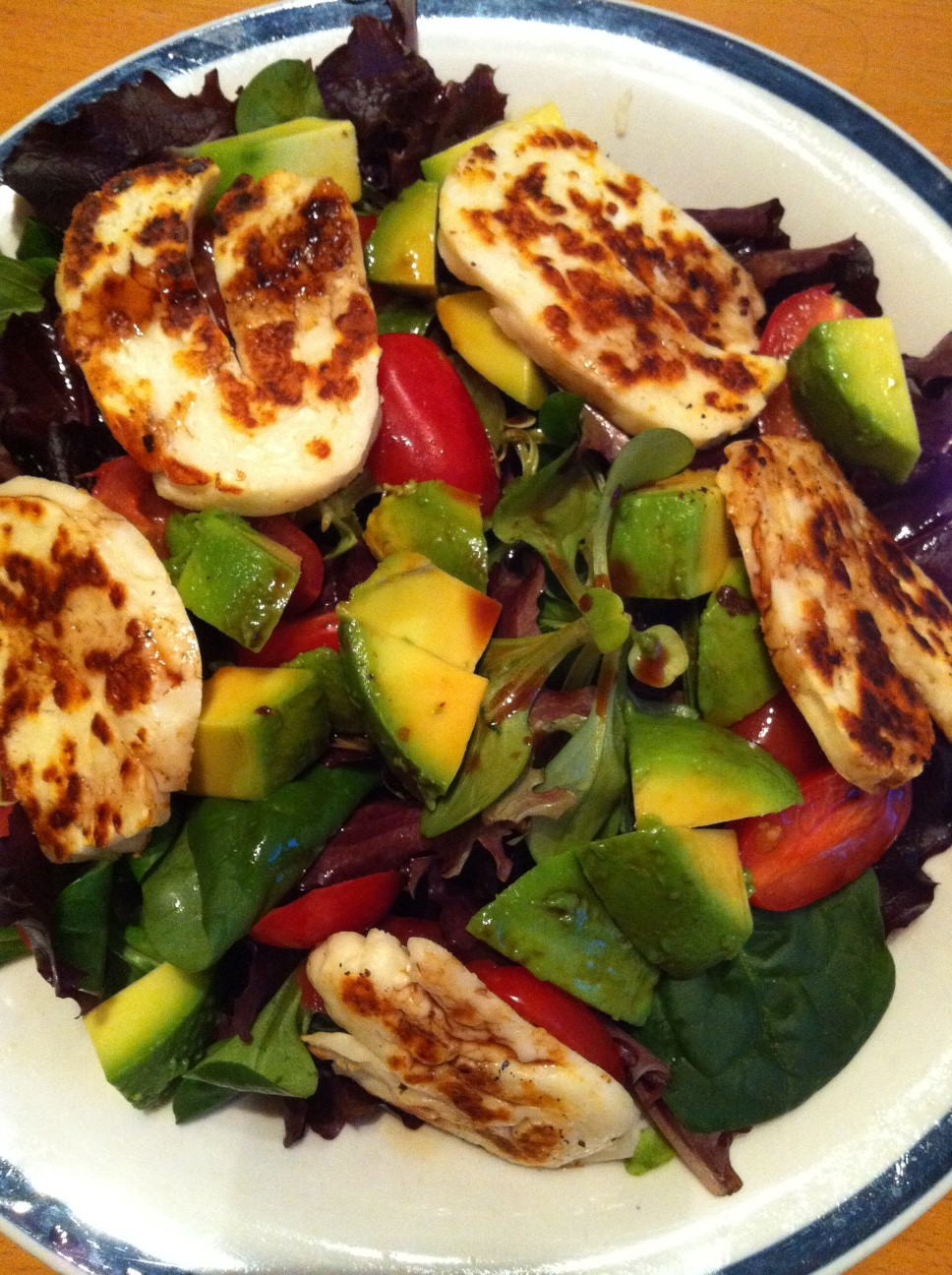
So I have been looking for things to fry (not easy with salads) and haloumi came to mind. Haloumi is a Cypriot cheese made from goat’s, sheep’s or cow’s milk, is salty to taste and firm in texture. I like it grilled, which creates a nice brown crust and softens the inside to a toothsome squidginess.
The bad news about haloumi is that if it goes cold, it takes on a rather rubbery texture (still tastes good though). Also, it is high in fat so if you’re concerned about that, try to watch the amount you’re using.
Haloumi salad
3-4 slices of haloumi
4 baby plum tomatoes
half an avocado
salad leaves
balsamic vinegar
Place the haloumi into a non-stick frypan (no oil necessary) over a medium heat.
While the cheese is grilling, arrange the salad leaves on a plate. Slice the tomatoes and avocado and add to the salad.
Make sure you turn the cheese once or twice during cooking so both sides take on that browned look. When they’re done, place them onto the salad and finish with a drizzle of balsamic vinegar.
I grew up with Asian soups, which are mostly broth-style concoctions with various things floating in them – from the standard pork and prawn dumplings or chicken to the weird and wonderful unnameable items that are considered to be the ultimate panacea for everything from stomach aches to back pain.
There is pretty much only one Western-style soup my mother makes, and that is pumpkin soup. It’s a hearty, filling winter wonder that I think is fitting for my American buddies who’ll be tucking into all sorts of Thanksgiving goodies very soon.
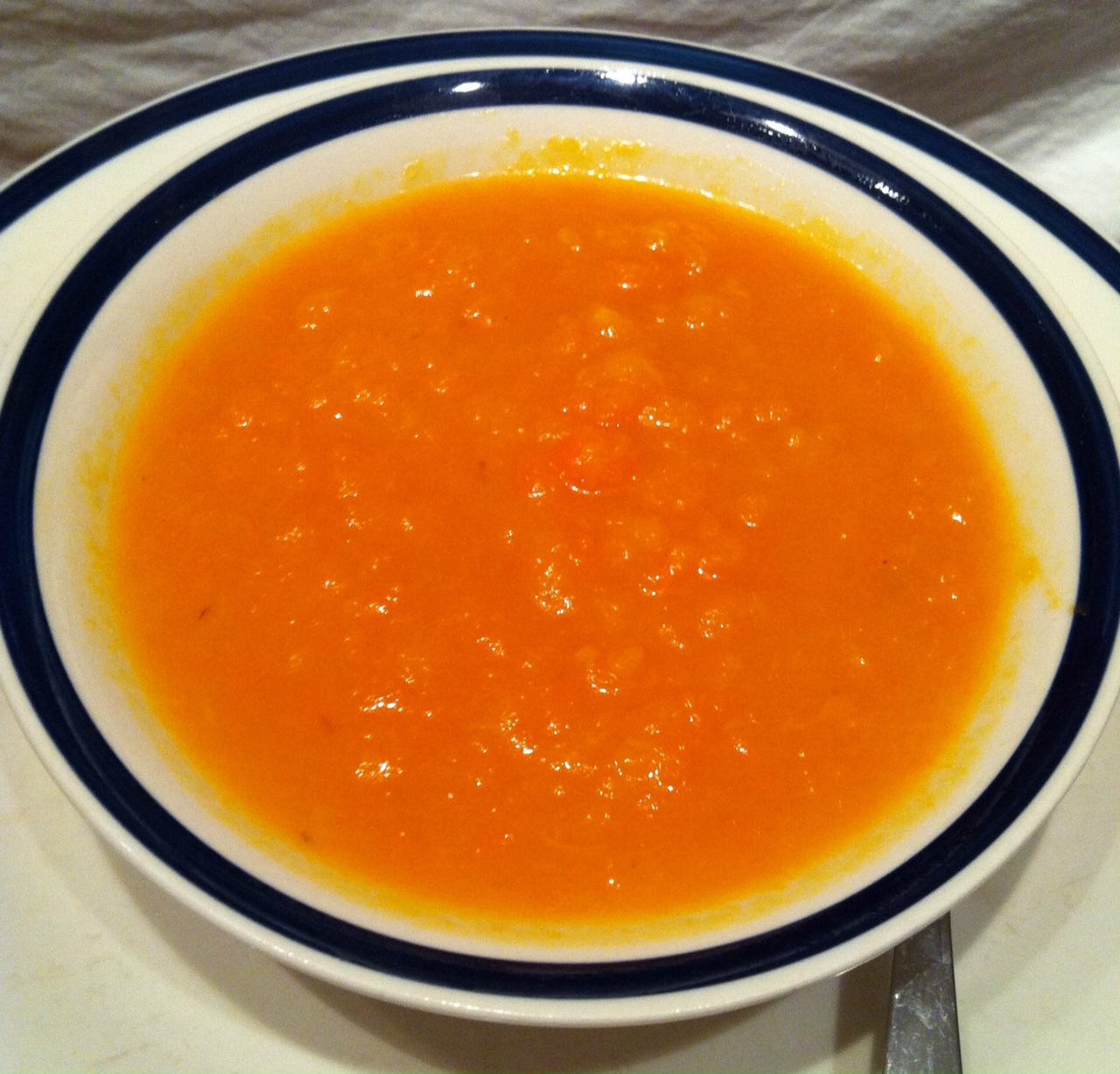
In my wholly unbiased and humble opinion it is the finest pumpkin soup you will ever taste, anywhere, and it ridiculously healthy because unlike most pumpkin soups it has no cream and no sugar, instead relying on the smooth texture and natural sweetness of the pumpkin. Go forth and try it! Wrap yourself in the warm blanket of virtue and congratulate yourself on how healthy you’re being.
Pumpkin soup
For the vegetable stock:
2 carrots
Two-thirds of a leek
Half an onion
2 sticks of celery
4 bay leaves
6 black peppercorns
For the pumpkin soup:
Half a kilo butternut pumpkin
Half a kilo paquito pumpkin
One-third of a leek, sliced
Half an onion, chopped
2 carrots, chopped
Make the vegetable stock by placing all the stock ingredients in a pot, covering with cold water and bringing to a boil, then turning to a simmer for 20 minutes. Heston advises that you should slice the vegetables as thinly as possible to provide as much surface area as you can, but if you can’t be bothered it will turn out just fine.
Meanwhile, prepare the pumpkin. The butternut pumpkin in my photo is just over a kilo, and the paquito pumpkin is just under a kilo, and I used half of each. You could simply use one whole pumpkin, but I like the different tastes each pumpkin gives – the butternut has a nutty, robust undertone, and the paquito pumpkin is just a little sweeter and negates the need for you to add sugar.
There is nothing for it but to chop the pumpkins into small pieces, removing the skin as you go. This is a fairly painful process but sadly I see no way around it. Wear your pumpkin blisters with pride.
Pumpkin blisters. I hope you can avoid these, but if not, wear them with pride.
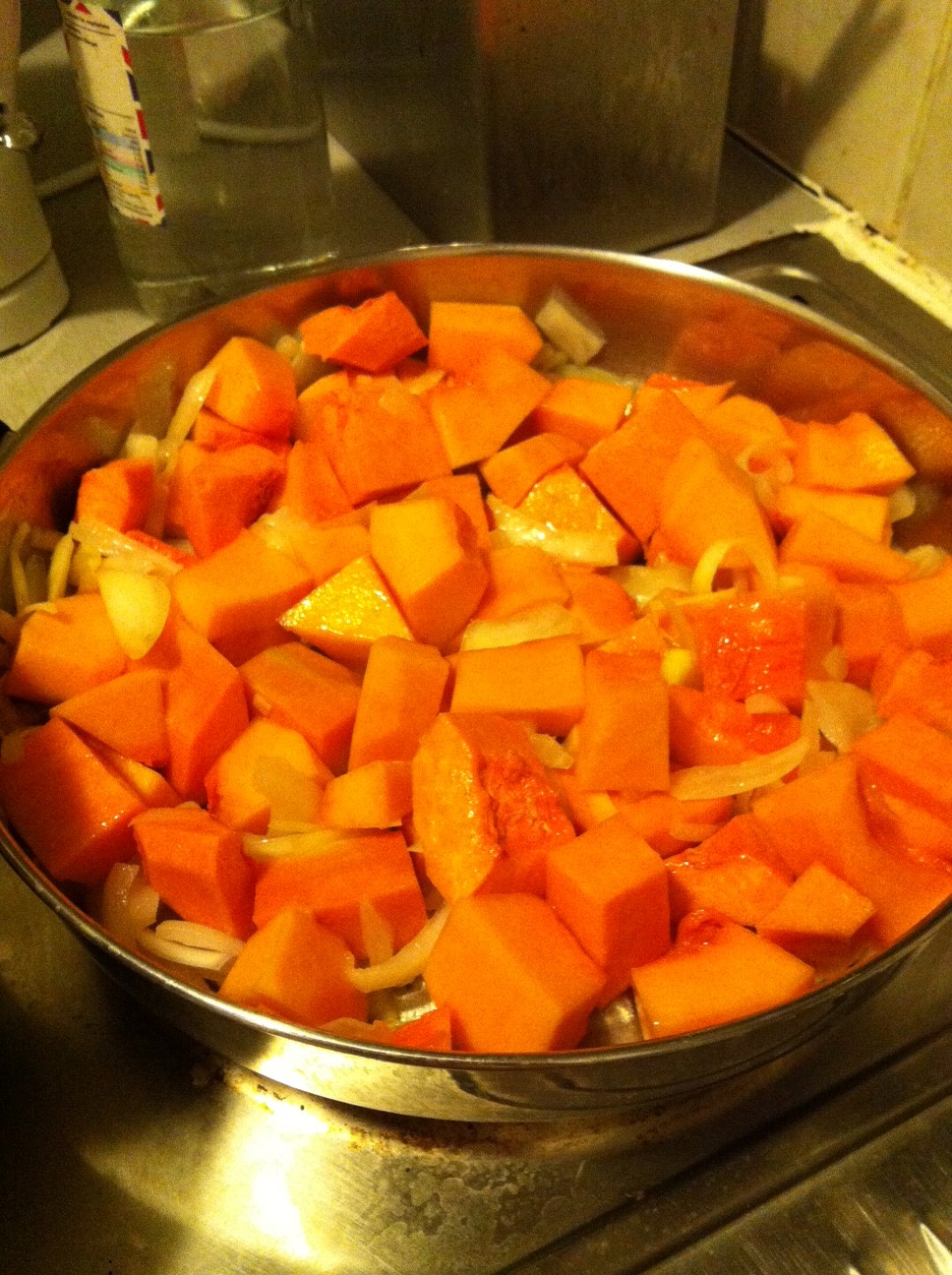
In a pan over a medium heat, place the onions and leek and cook until they start to soften but don’t brown them.
Add the pumpkin pieces and cook for 7-8 minutes.
A glorious orange frenzy
Meanwhile, drain the vegetable stock, reserving the liquid. Put the liquid back into the pot and add the chopped carrots, and when the pumpkin and onion is ready, add it to the pot. Cook for 20minutes or until the pumpkin is very soft.
Remove from heat and ladle out a bowlful of the liquid, keeping to one side. You want to hang onto this just in case the soup is thicker than you would like.
A stick blender would be ideal at this point, but I don’t have one, so I just used a hand masher instead – hence the rather pureed look of my soup. It still tasted wonderful. Proof positive that some recipes are extremely forgiving!
It’s a zucchini, it has always been and will always be a zucchini, but today I will concede to the French because courgetti sounds so much better than zuchetti.
A while back, when I was investigating low-carb meals (that was a hoot), I came across the notion of using vegetables as alternatives to pasta and rice. There was the mysterious as-yet-unseen spaghetti squash (a pumpkin that turns into noodles when you cook it?? What?!), cauli-rice, cauliflower mash, and of course, courgette spaghetti.
At the time I thought nothing of it – but after watching Nigel Slater methodically clean his fridge by getting creative with his leftovers, I was inspired. I had half a bag of dangerously green spinach, a handful of plum tomatoes and a sliver of smoked salmon lying around. And so with a renewed creative burst I made the tastiest supper I’ve had in a long time, and I’m going to share it with you on the condition that you understand that I haven’t been disloyal to my Australian roots by calling it courgetti.
A myriad of flavours and textures. Just perfect.
Spinach and ricotta courgetti with smoked salmon
1 courgette
2 garlic cloves, sliced
Half a bag of spinach (about three handfuls)
1 small slice of smoked salmon, pulled into pieces
1 tablespoon smooth ricotta
6 mini mozzarella pearls (you can use one ball and slice it if you like, but I think the pearls are adorable)
6 plum tomatoes, sliced
Balsamic vinegar
In a pan, place the garlic and a good slug of olive oil and some salt to stop the garlic burning. Keep over a medium heat, being careful not to let the garlic colour, whilst you prepare the courgetti.
Take a vegetable peeler and run it down the length of the vegetable, as if you were going to peel it, but keep peeling in the same direction to form strips. I always, always find that peelers aren’t big enough to accommodate the full width of the courgette, so I peel until it starts to become a problem and then I turn it over and do the other side until the same thing happens. At this point, I slice the zucchini in half lengthways and continue with the peeler.
Once you’ve gotten to the point where no more noodles can be made, just chop the remaining chunk of courgette and add it to the pan with the garlic, which should be sizzling nicely by now.
Let the chunky courgette cook until soft and then add the spinach. When it starts to wilt, add the courgetti and move it around the pan. The courgetti really only needs about two or three minutes to warm through and take on the taste of the garlic.
Add the smoked salmon, then remove the pan from heat and dab in blobs of the ricotta. If you’ve bought smooth ricotta, it basically melts to form a creamy, garlicky sauce, but I imagine regular ricotta would be lovely as well.
Arrange on a plate and top with the mini mozzarella pearls, the plum tomatoes and drizzle with balsamic vinegar. The mildness of the courgette is the perfect base for the creaminess of the cheese and the sharpness of the tomatoes and vinegar, set off nicely by the zingy garlic. Bliss.
I’m not a good sick person, either. There are people who bear their affliction with grace, fortitude and a staunch cheerfulness whilst delicately withering away, kind of like Beth in Little Women. I’m not one of them. When I have a cold, there’s wailing, whingeing, spluttering and coughing, the cursing of trans-seasonal weather, piles of tissues and a good deal of feeling sorry for myself. It’s unfortunate, but there it is.
Strange things happen to my appetite when I’m sick, and it’s probably the only time I’ll ever say ‘no thanks, I’m not hungry’. My culinary planet becomes sadly Pluto-nic, reduced to a dwarfish set of dry crackers and some hot tea. Eventually if that doesn’t help, I’m forced to pull out the big guns, the cure-all, the substance known throughout the world as Jewish penicillin – chicken soup.
Chicken soup is a lengthy two-stage process, but fortunately it’s so simple that even a sick person can probably cope with it. The stock itself involves almost no work, and if you’re beat after that then you can simplify the soup down to a handful of barley and a cup of frozen vegetables. The key is to serve up large, steaming bowls, wrap yourself in a furry blanket and let the love envelope you.
Chicken soup The stock
4 chicken Marylands (you can use 8 chicken drumsticks if you prefer)
2 carrots
2 sticks of celery
Half a leek
4 cloves of garlic
6 black peppercorns
The soup
2 carrots, chopped
Half a cup of barley
Half a leek, sliced
Salt and pepper
Place all the ingredients for the stock in a pot and cover with cold water. Bring to a boil, then turn down to a low simmer and leave it for an hour. Skim off the scum that floats to the top.
Once the hour is up, remove the chicken and strip the bones, returning the bones to the pan and keeping the meat separate. Allow the bones to boil very gently for another 45 minutes.
Remove the bones and vegetables and discard. The best way to do this is obviously to strain it, but if you don’t have a strainer then a slotted spoon is fine. You should be left with a lovely stock.
If you’re conscious about fat, the best thing to do here is to refrigerate the soup overnight and skim off the layer of fat in the morning. The amount of fat can be quite substantial because of the chicken skin, and removing the solid form is easier. But if the thought of doing this makes you feel old and weary and defeated, crack on with the soup.
Return the chicken meat to the pot and add the barley, chopped carrot and sliced leek. Season with salt and pepper, then boil for half an hour and serve.
There are two reasons I remove and discard the original vegetables and then add new ones: firstly, because once they’ve been boiling for two hours their flavour and nutrients are already in the pot, and secondly I like to be able to control the texture of the final soup veg. Plenty of people have their own preferences as to what goes into the final chicken soup, adding potato, swede, peas, pasta or bread dumplings; I’m not going to interfere. If you’re sick, it’s time to be a little self-indulgent. Do whatever feels right for you.
A note about chicken stock: honestly, I don’t really care if my stock is cloudy, but some people prefer the clear consommé-style stocks. Really. There are entire discussions on various blogs about how why a stock goes cloudy and the best way to clarify it.
From what I understand, a stock will go cloudy if it is brought to a rolling boil, which breaks down the collagen in the bones and allows it to leach into the soup, making it thicker and sticky like tonkotsu ramen. Some people say it’s the fat, not the collagen, which emulsifies through the soup, giving it a cloudy appearance.
Whatever the reason, most cooks agree that if you want a clear soup, you need to bring the pot to just below boiling point and simmer for longer – a full cooking time of two and a half hours. As long as you don’t boil it, you’ll have a light, clear stock. And then you need to strain it through cheesecloth to get rid of the bits.
Breakfast: one of the three most imporant meals of the day.
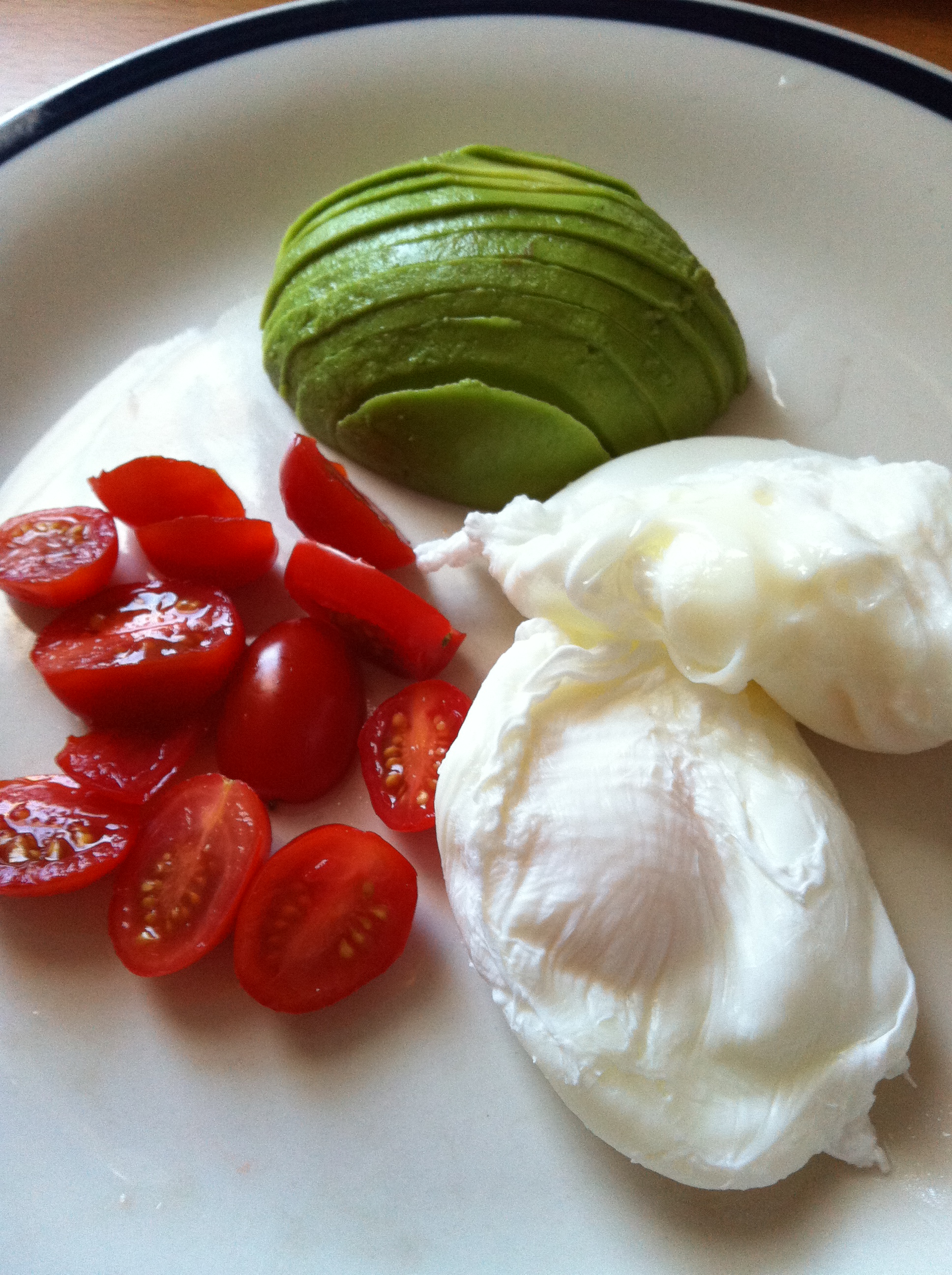
There’s something very special about poaching. I think it’s mainly because it’s such a precarious process and one we generally prefer to leave to cafes with experience in that kind of thing. After all, it involves breaching the protective barrier of the shell and expecting the whites to hold together and surround the yolk in an aesthetically-pleasing fashion while you simmer it in a pan of hot water – honestly, we don’t expect much, do we?
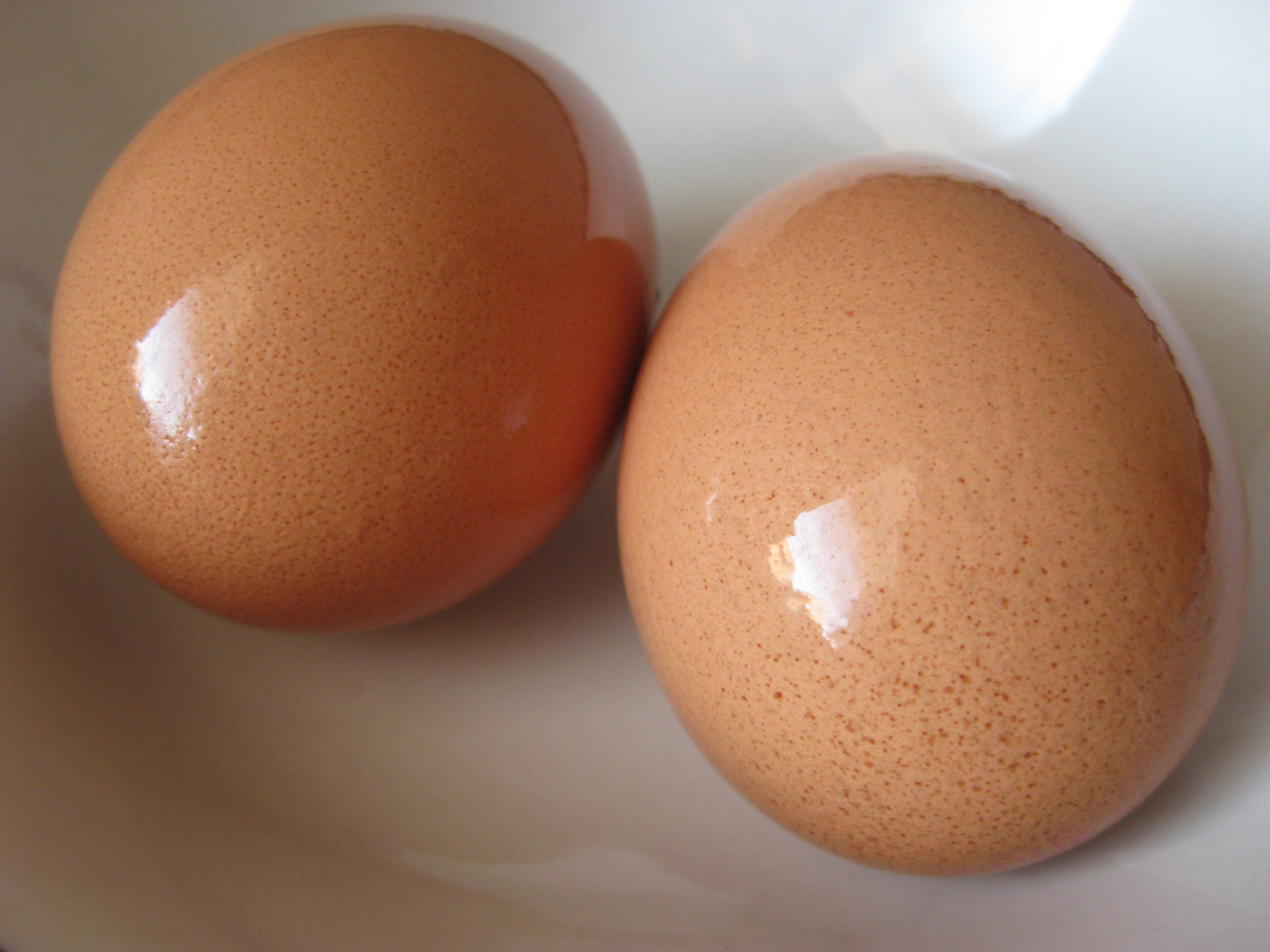
I’m not going to get holier-than-thou about free range eggs, because it’s not as if I haven’t bowed to cost pressures and bought cage eggs before. But for poachies, there is simply no alternative. You have to use the free range kind, which have better shells so they’re less likely to explode in the pan when you boil them. They also tend to be larger, more flavoursome and upon consuming them, you achieve a nice halo effect that only comes with doing the humane thing and being able to feel virtuous about it.
Little beauties. Aren’t you gorgeous?
The other non-negotiable factor is the freshness of the egg. If you don’t have super fresh eggs – they’re not always easy to get in London – you should consider scrambling, frying, hard-boiling or half-boiling your little loved ones. Either that, or lower your expectations. The albumen in fresh eggs clings to the yolk better and will help you to achieve that nice ‘whole egg’ look. Once they’re a few days old, it begins to pull away and it makes it difficult to keep the team together.
Poached Eggs
2 large free-range eggs
Vinegar
Half-fill a pan with water and bring to a low boil. Add a splash of vinegar – don’t worry, you won’t be able to taste it. It just helps the shells not to crack when you boil eggs (incidentally, if you’re hard-boiling, the vinegar will stop the shells from splitting and leaking egg white into the pan).
Using a slotted spoon, gently lower the two eggs into the pan. Boil for 20 seconds and rescue.
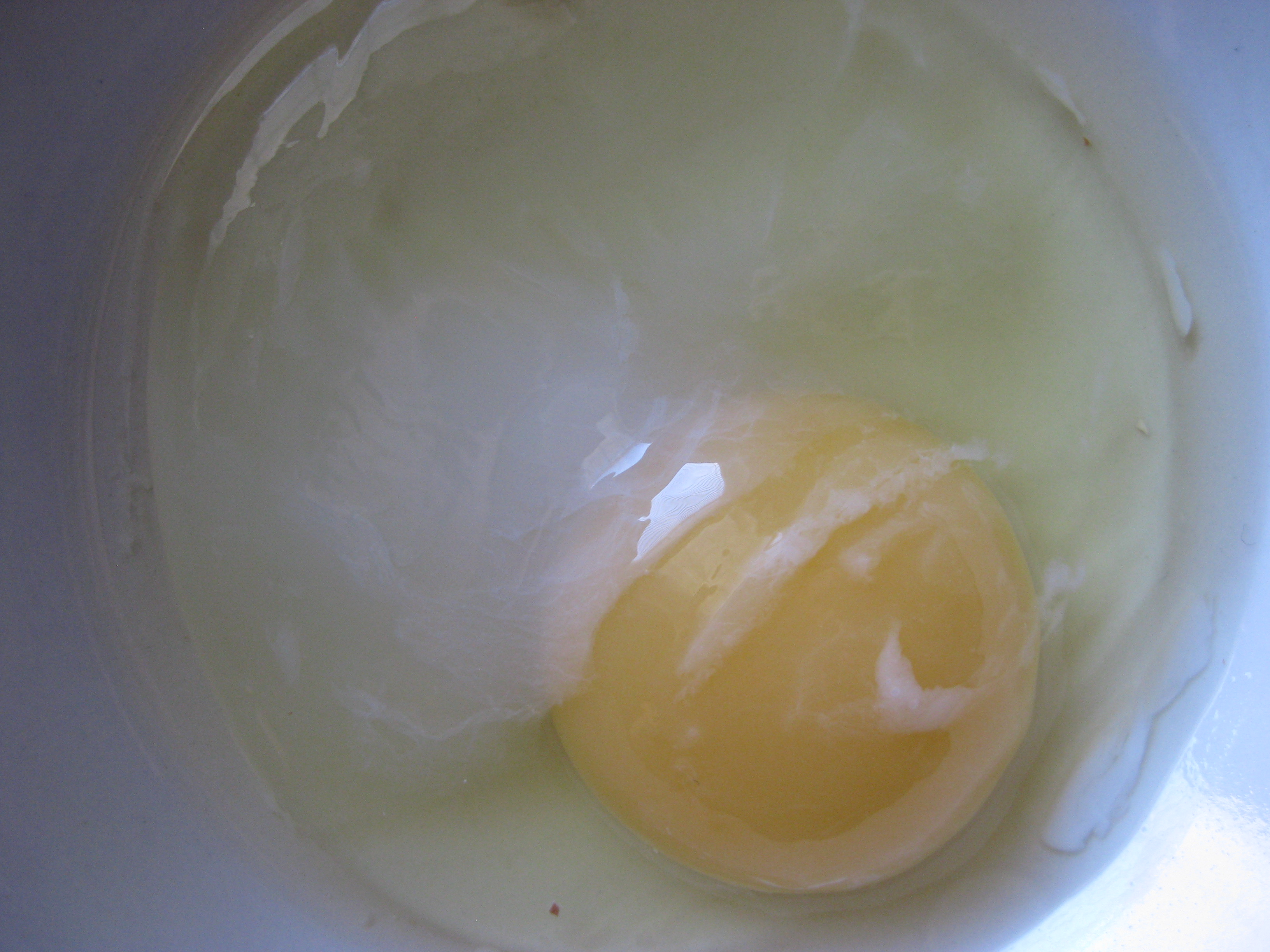
Using a fork to split the shell, break one egg into a shallow dish. The white should just have begun to take on a translucent sheen.
Being an egg ain’t all it’s cracked up to be.
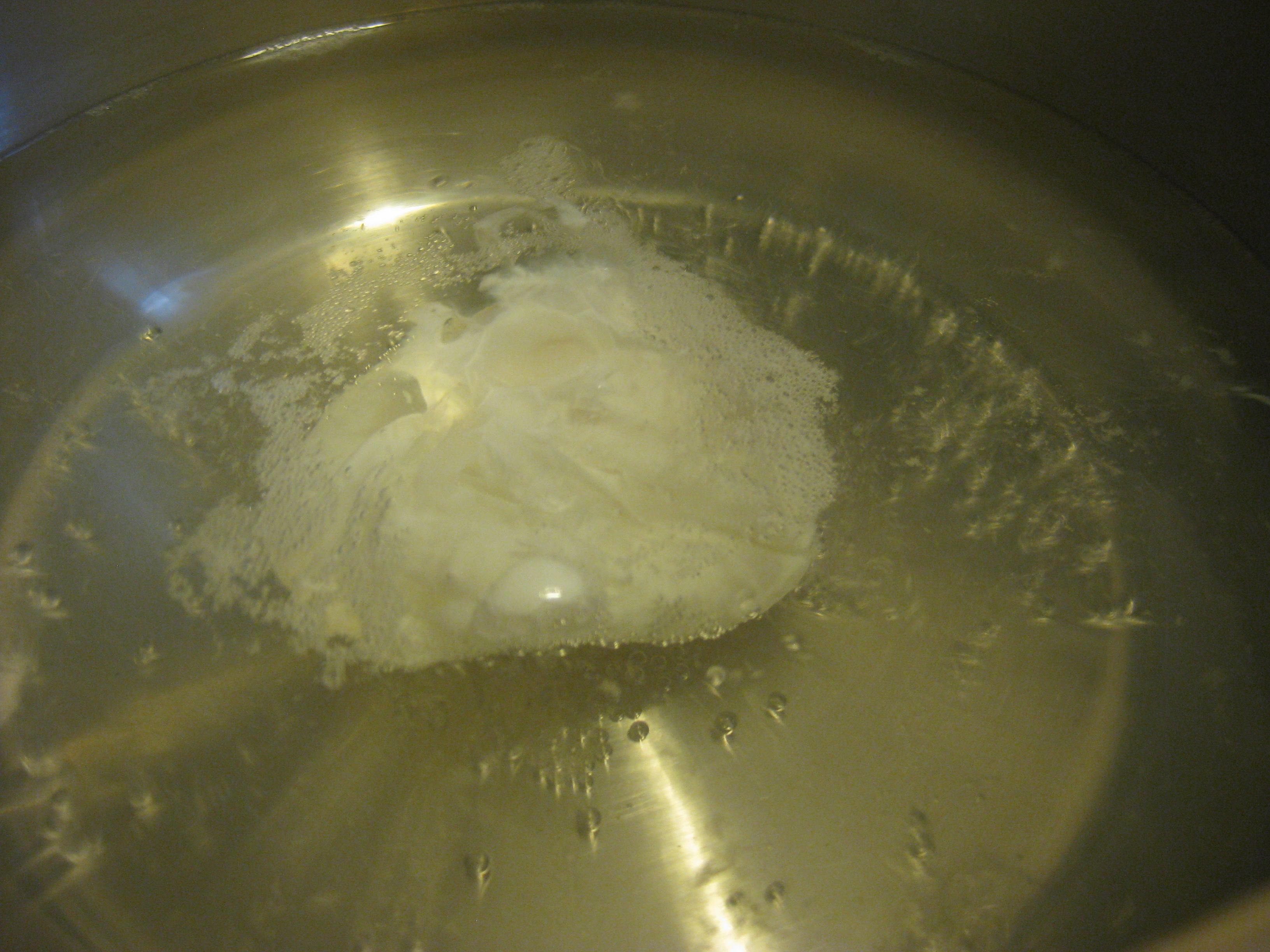
Make sure the water is on a low simmer – steam should be rising from the pan, but the water shouldn’t be moving very much. An occasional bubble is good. Hold the dish over the water and gently slip the egg into the pan. The way it falls is the way it sets, so be careful!
In a perfect world, every egg would poach like this.
A soft-poached egg takes approximately 2-3 minutes. If your pan is large enough and your egg seems to be holding it together nicely, do the other egg on the other side of the pan. Otherwise, cook your egg for 2 minutes and place into iced water to stop the cooking process while you take care of the other eggs. Before serving, dip it into hot water for 30 seconds.
And hey, don’t worry so much if your egg whites run everywhere. If it’s just for you, nobody will know – and if you’re cooking for other people, they’re probably just happy they’re not the ones at the stove.
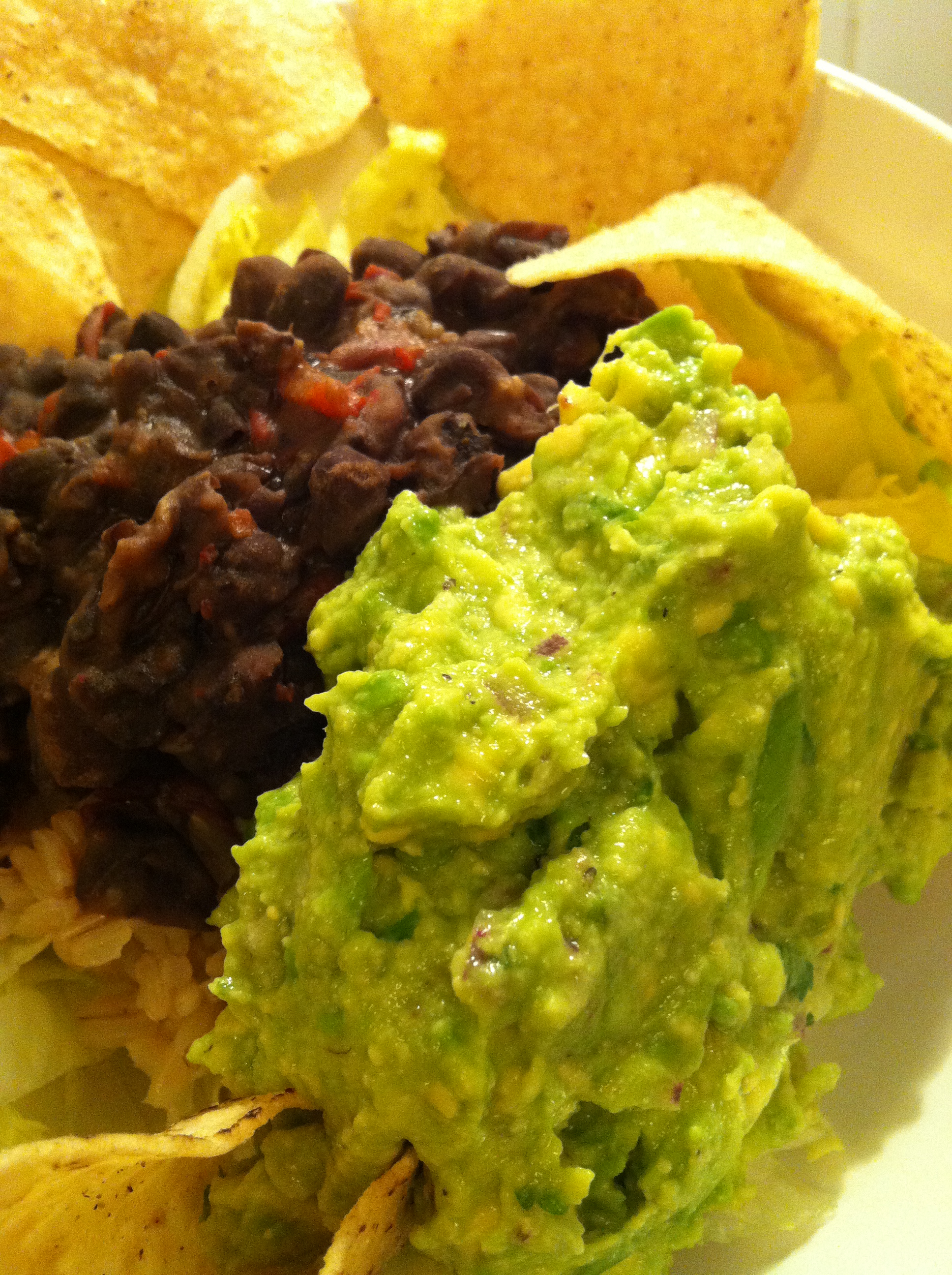
Those of you who are quick on the uptake (or just really passionate about food) have probably spotted the glaring problem with the photo on my guacamole entry.
Salsa, of course! It’s not there!
I had committed the culinary equivalent of placing Romeo without Juliet, Mickey without Minnie, Abelard without Heloise (although she would have been much better off without him, in my opinion). I don’t quite know how it happened, but let’s just say that I was overcome with the excitement of learning how to make guacamole that I simply forgot about the unbroken pact between guac and salsa.
I’m going to rectify that now, because trying to have a Mexican meal without salsa just isn’t right. I won’t allow it.
Salsa
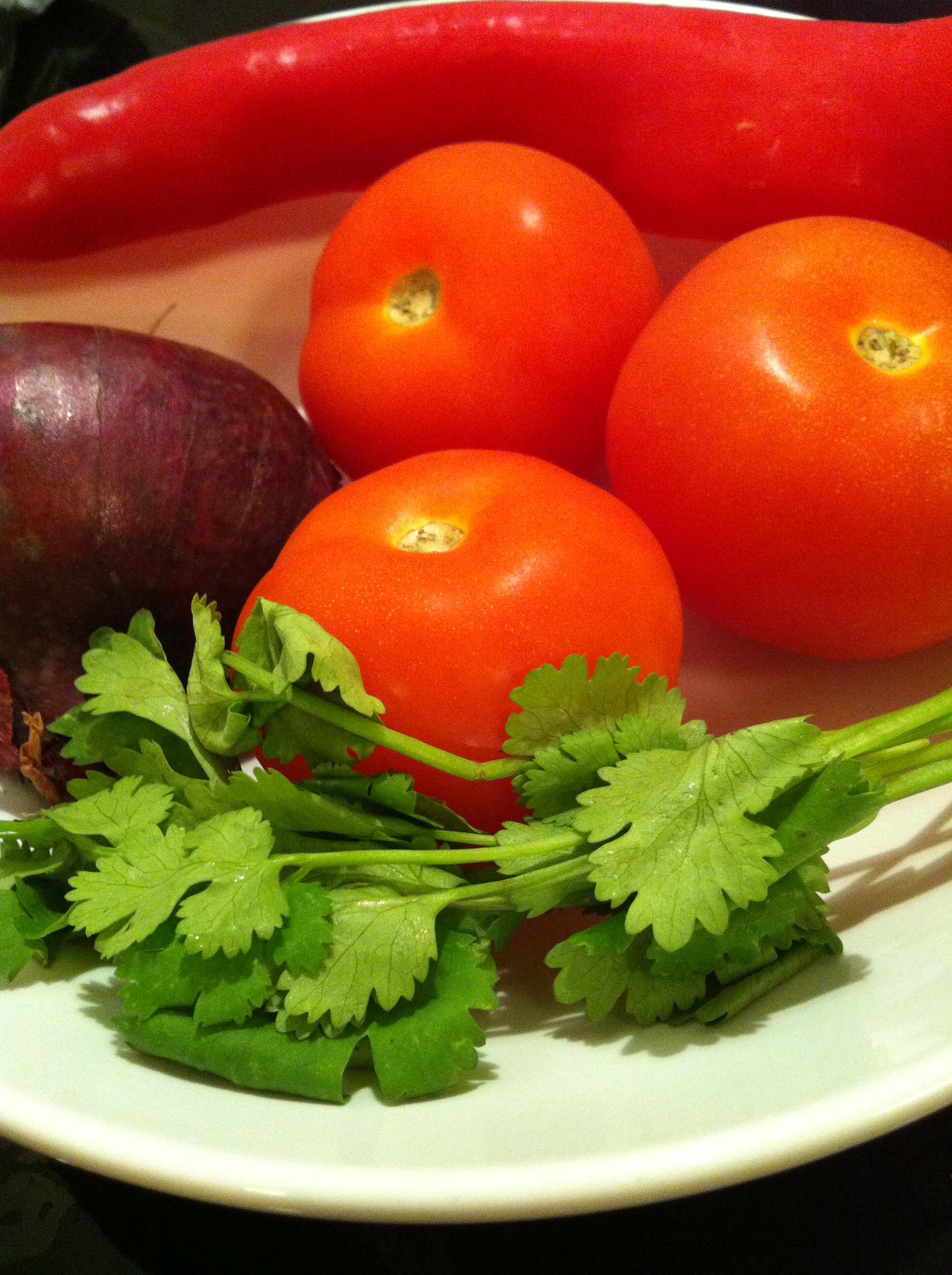
3 tomatoes
Quarter of an onion
One deseeded chilli
Small handful of fresh coriander
Salt
Squeeze of lime juice
Finely chop the tomatoes, onion, chilli and coriander. Combine in a bowl and add salt and lime juice to taste. Nothing simpler!
Mexican cuisine is like the lover who sporadically makes appearances in your life and works his way back into your heart by charming you with something new and exciting each time. After a particularly long run of soups and salads and sandwiches, Mexican shows up and you vaguely consider settling down – because it has flavour, texture, heat and sweetness and crunch and comfort; everything you could possibly want in a cuisine.
It amuses me to tell you that for the longest time I didn’t like avocados. I used to scrape the guacamole off my nachos and give it to my bestie. In fact, I didn’t like avocados until I came to this country and tried guacamole at Wahaca.
Slowly, I’ve fallen in love with the creamy texture and subtle, fresh taste. Guacamole is something indescribably complex; muted creaminess balanced with the spike of raw onion, chunks of soft flesh, a sharp note of lime juice and of course the flavour kick of coriander. These days I’m drawn irrepressibly to the vivid, iridescent green whenever I’m in a Mexican restaurant.
Guacamole
3 x large ripe avocados*
Half a red onion, very finely chopped
1 lime
Small handful of coriander, finely chopped
Salt
Mince the coriander and half the onion, chopping as finely as humanly possible. If you’re lucky enough to have a mortar and pestle, use that. Otherwise, a little muscle on the chopping board will do. Place into a bowl, add a pinch of salt.
Scoop the flesh from the avocados, add to the bowl and mash with a fork. Add half the lime juice as you go.
When you’ve got a rough guacamole, add the rest of the lime and onion and mix well. Season with black pepper and more salt if necessary.
If you like, you could add additional coriander leaves, chilli or a deseeded tomato.
*It’s easy to buy avocados from Sainsbury’s or Tesco, where they’re the cheapest, but often the ‘ready to eat’ avocados are about as hard as hockey pucks or else they’re descending into that really icky soft rotten place. Press gently on the small tip and if it gives just slightly you’re in luck. Otherwise buy firm avocados a few days ahead and keep them in the fridge.






 tiny kitchen, big appetite