oatmeal with almond milk

oatmeal with almond milk
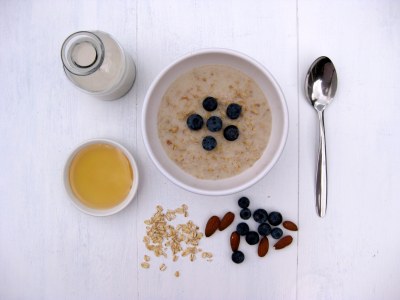
A delicious bowl of oatmeal with almond milk.

My beautiful sister is a medical doctor, yoga teacher and busy business owner who, in addition to being an all-round nice person and a luxury handbag addict, runs a holistic health programme based on a blend of science and Eastern philosophy. Through the process of thought, movement, physical care and spiritual nourishment, the Global Goddess Project aims to encourage people to live healthier, more fulfilling lives.

And what could be a better way to begin that life than with oatmeal?
breakfast oatmeal
It takes just five minutes to make oatmeal.

Oatmeal is one of those beloved breakfast stalwarts you probably grew up with. On cold wintry days before the house had quite lost its chill, I would shiver my way into the kitchen and scant minutes later, sink into a pile of oats that warmed me from the inside out. It was not quite enough to make up for the fact that I was no longer snuggled under my doona, but it was a comforting consolation.

oats
Hay there. Remember us?

If you need further motivation to embrace oatmeal, just think about the fact that oats are one of the best foods you could possibly eat. Oats are high in insoluble and soluble fibre, including a specific type of soluble fibre called beta-glucans, which are proven to lower LDL cholesterol and reduce the risk of heart disease. They’re low-GI, which means they are digested slowly and are an excellent choice for diabetics.

Oh, and they’re naturally gluten-free. More oats for everyone, I say!

If you’re looking for a breakfast that you can have on a detox, low-stress or immunity-boosting diet, look no further. The almond milk makes it dairy-free and the blueberries, which are high in vitamins C and K as well as cancer-fighting flavonoids, are tasty as well as being extremely good for you.

So take five minutes at the start of your day to treat yourself well. Don’t you deserve it?
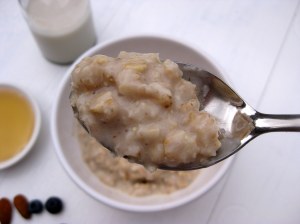
oatmeal
It’s like a big hug at breakfast.

Oatmeal with almond milk
1 cup rolled oats
1 cup water
1 cup unsweetened almond milk
1 tbsp honey
Small handful blueberries

Place the oats and water in a saucepan over a medium heat, stirring until the water has been absorbed.

Add the almond milk and cook the oatmeal for 4 minutes, or until the milk has been absorbed and it achieves a thick consistency.

Stir through the honey and blueberries. Oh, and don’t forget to soak the oatmeal pan immediately – removing hardened oatmeal is a soul-destroying experience.

A few notes about oats.
Rolled vs steel-cut: the difference here is in the process. Rolled oats are de-husked, steamed, rolled and then lightly toasted. Steel-cut oats are chopped before steaming so they retain bits of the bran layer. They’re chewier, taste nuttier, have a slightly lower GI profile and typically take longer to cook (about 30 minutes on the stovetop). You can pre-soak them overnight to reduce the cooking time if you want to use steel-cut oats.

Gluten-free: oats are naturally gluten-free, but can be cross-contaminated during growing if they’re next to wheat fields. If you’re gluten-intolerant, you can buy gluten-free oats that have been certified through growth and production as being free from gluten.
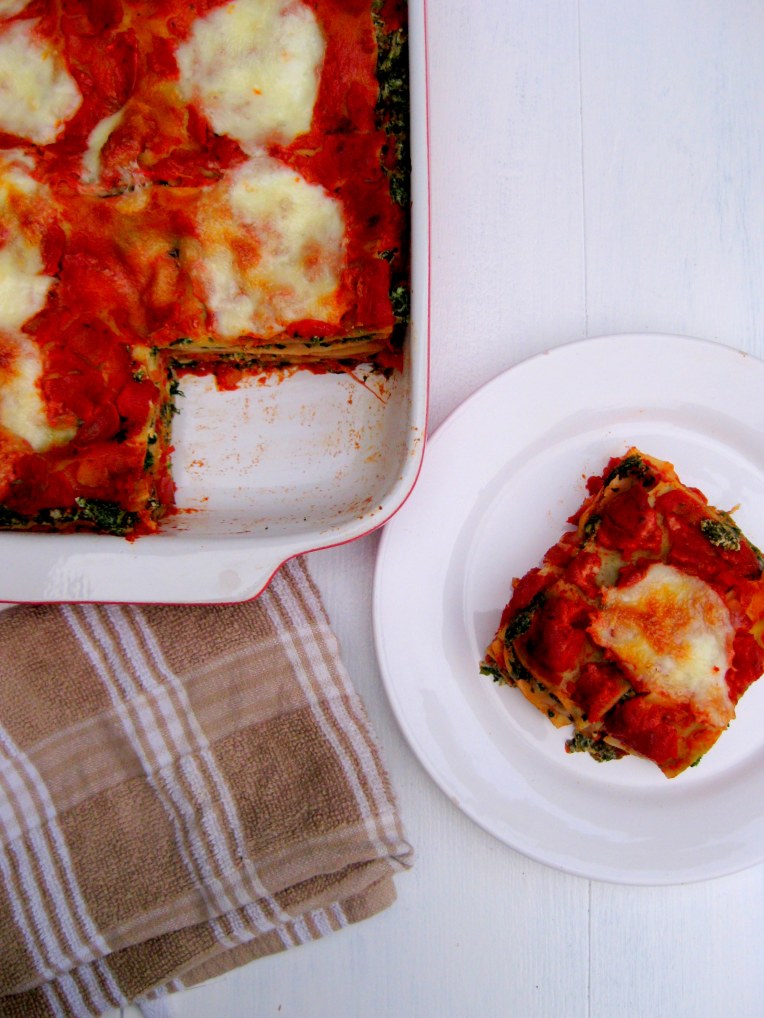
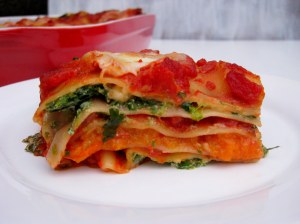
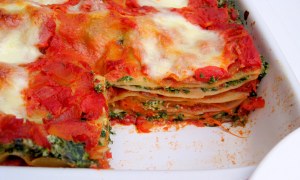
spinach & ricotta lasagne

Warm and comforting.

I’m not a vegetarian.

I mean it. I love meat. I celebrate spaghetti bolognese. I adore lamb shanks. I’m devoted to roast chicken. I have been known to weep with joy over a good unsmoked rasher of back bacon, damn it. Basically, if it swims or flies or roams this earth in a non-human not-too-exotic fashion, odds are I’ll have considered eating it at one point or another.

But despite my keen interest, I don’t really eat very much of it.

I know many people who belong to the ‘if it doesn’t have meat in it, it’s not a meal’ school of thought. Often, they are rightly concerned about the nutritional balance of a vegetarian lifestyle, which can lack protein, iron and magnesium if practiced incorrectly. Sometimes they approach it from a culinary perspective, because truthfully meat will add a taste and texture no other food can quite emulate. Mostly, though, the reasons have to do with a mental state; it doesn’t feel like a real meal if it doesn’t have meat in it.

The thing is, there are plenty of compelling reasons to eat less meat: environmental sustainability, health, cost and convenience being just a few. These are all solid incentives, but surely one of the greatest motivations is vegetarian food itself; it can be so darn good. The problem is overcoming years and years of bad restaurant PR – decades of limp pasta arrabbiata and dry veggie burgers – which is not at all representative of vegetarian cuisine.

Nothing limp or dry about this.

Me, I’m a part-time meat eater at best, and this is what I’ve learned from my casual carnivorism: if you want to eat less meat, you can’t just cook traditionally meat-based dishes and leave the meat out. You’ll always feel like something is missing, and it will be, because you crafted it with meat in mind. Instead, you have to truly celebrate vegetables. After all, what is a chicken salad without the chicken? A pile of sad-looking lettuce and a mangled tomato, that’s what. But what if you created a salad with the earthy crunch of spinach, and added sweet kernels of corn, nutty quinoa, roasted pumpkin, avocado and a scattering of pine nuts? Would you truly feel deprived?

A meal doesn’t need meat to be satisfying; to me, what matters is how you use the ingredients you choose to include. So as an enthusiastic advocate of vegetables I want to share this recipe with you; it’s delicious and filling – I think the word ‘nourishing’ would be appropriate. It warms you from the inside out, like the pasta version of a big, warm hug, and it is: a pile of vegetables, loving you back.

Make and bake. Simple and delicious!

Spinach and ricotta lasagne
250g lasagne sheets
500g frozen spinach, thawed and drained
250g ricotta
Pinch of nutmeg
1 egg
1 x 125g ball of mozzarella
2 x 400g tins of canned tomatoes
1 x 400g jar of passata
1 onion
1 vegetable stock cube
Mixed herbs
Salt and pepper

Make the tomato sauce first. Chop the onion and sauté gently until translucent, then add the tomatoes, passata, stock cube and herbs. Simmer for 15 minutes and taste, adjusting the seasoning. Depending on the sharpness of the tomatoes, you might need to add ketchup or sugar.

Mix the spinach with the ricotta, egg and nutmeg. Add salt and white pepper.

Starting with a drizzle of the sauce so the lasagne sheets don’t stick to the bottom, layer the sheets, sauce and spinach mixture in an ovenproof dish.

Bake at 200C for 20 minutes, then top with the torn mozzarella ball and return to the oven for another 30 minutes.

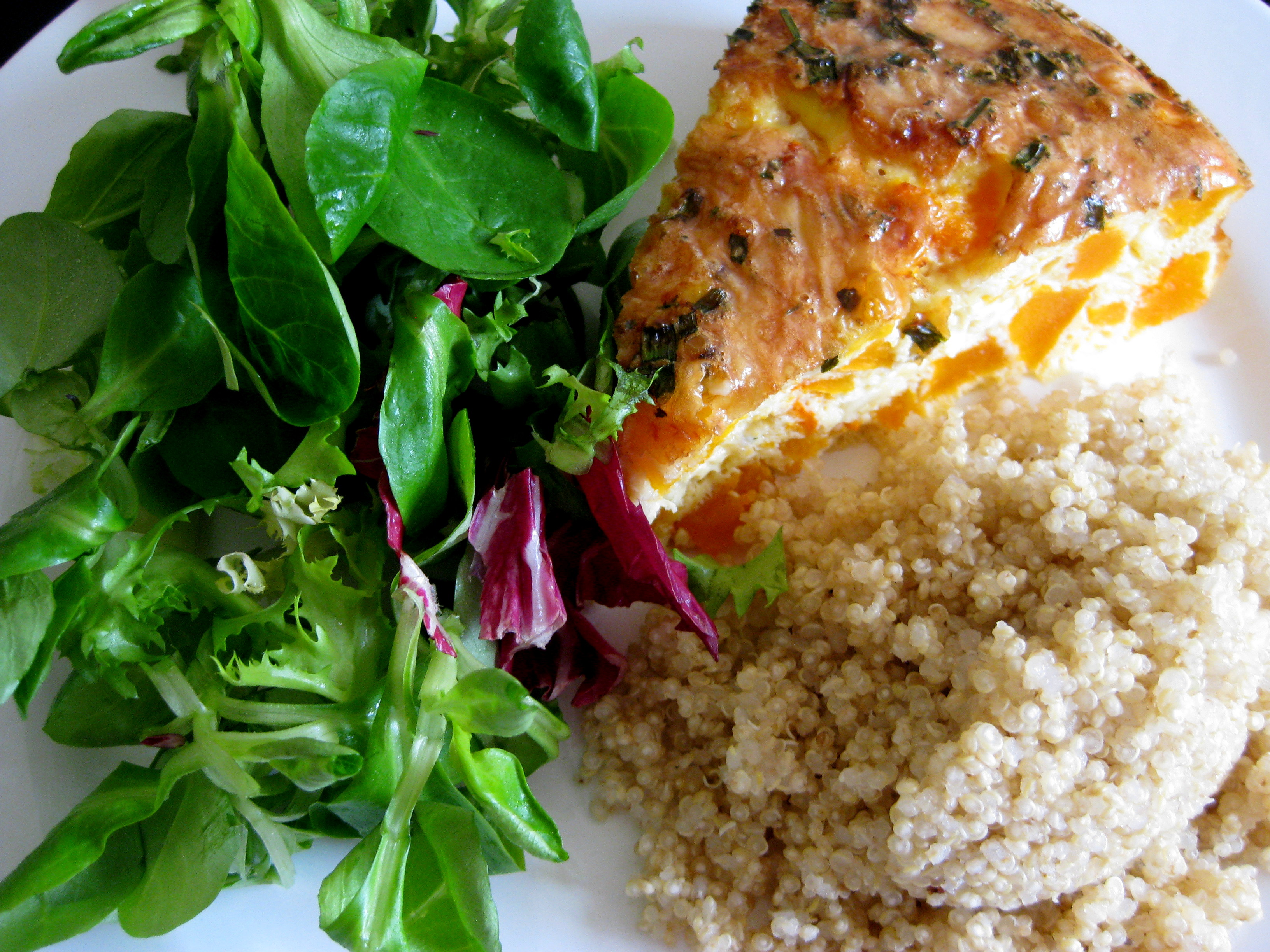
pumpkin & cheddar frittata

It's sunshine in cake form.
It’s sunshine in cake form.

Frittatas are gloriously summery. Sweet and eggy, deliciously filling and incredibly versatile, frittatas are this lovely golden yellow that always makes me think that they’ve found a way to catch Italian sunshine and smuggle it back for the rest of us. Somehow, despite being basically a collection of eggs and odds and ends, they’re unfailingly cheerful. I challenge you to stare at a frittata and not feel uplifted by its simple goodness.

It’s pretty difficult to stray too far off the path with a frittata, even if you’re not following a recipe. They’re the kind of thing you vaguely know how to make almost instinctively, and they’re fairly forgiving, so they’re the ultimate in stress-free cookery. What’s not to love?

I love making frittatas with sweeter vegetables like pumpkin and zucchini to bring out the natural sweetness of eggs. You can serve frittatas hot or cold and they’re great accompanied by a fresh salad, beans or some quinoa.

Serve with salad and quinoa.

Pumpkin and cheddar frittata
1 x medium butternut squash
200g cheddar cheese, half grated, half cubed
9 eggs
Small bunch of chives
Salt and pepper

Cut the butternut squash into small chunks and roast in a 200C oven for around 20 minutes, or until soft.

Take it out and remove the skin – I find it easier and faster to do after it’s been cooked, but you do lose a little more pumpkin flesh.

Chop into cubes and place into a cake tin (one that doesn’t leak is helpful!) with the cubes of cheddar.

In a bowl, beat the eggs until light and fluffy, then snip the chives in and add a good strong pinch of salt and white pepper. Stir in the grated cheese and pour the lot into the cake tin.

Bake in a 200C oven for 40 minutes.

avocado & oat cookies

Being good to yourself is important, but so is being kind to yourself.

Is it possible to have your cookie and eat it too?

I’m so glad you asked. Summer is well and truly here, bringing the whole healthy eating thing into glaringly sharp changing-room-lights focus. Not just because of the amount of skin we’re starting to show (a pretty terrifying prospect all on its own), but also because the heat makes it so much harder to feel good if we’re eating badly.

There are lots of differing opinions out there as to what constitutes ‘eating badly’, but I think you can’t go too far wrong if you listen to your body. For me, that means I physically feel pretty awful if I’m on a constant diet of deep-fried foods, fatty meats, sugary drinks and refined carbs (basically all the fun stuff). But at the same time, mentally I feel pretty awful if I’m restricted to lettuce leaves and a wistful, longing look at the wine list.

So is there a balance? I think so. I feel pretty good and fairly sane if I’m eating complex carbohydrates like brown rice and wholemeal bread, a smattering of lean meats, loads of vegetables and the occasional reality check of eating whatever I want to.

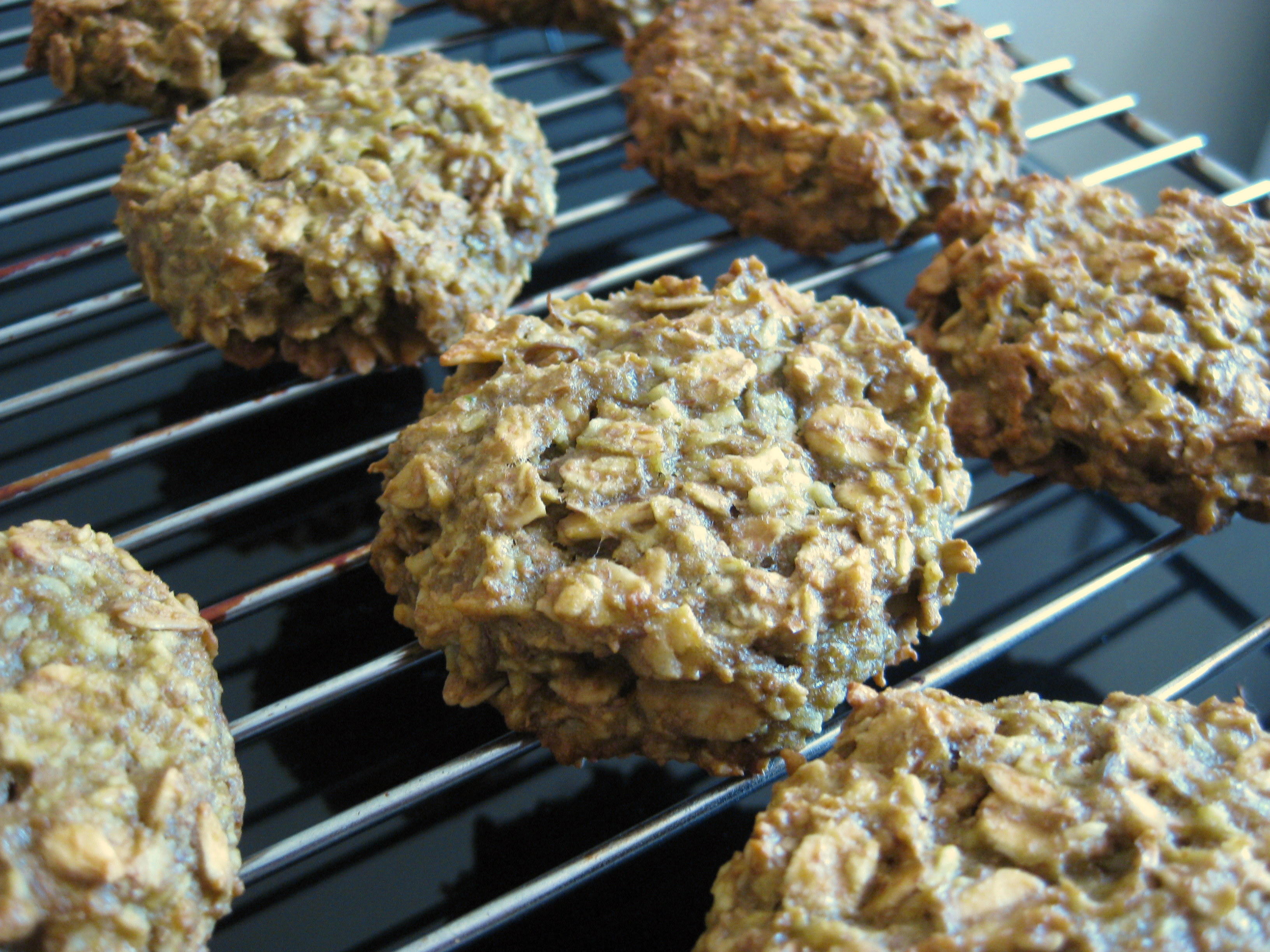
avocado and oat cookies

Which brings us nicely to today’s recipe. It’s basically an adapted Anzac biscuit recipe, made with wholemeal flour, a reduced amount of sugar and without butter. Once again, I’ve gone with avocados in place of butter – honestly I think I ought to take out shares in an avocado farm – which lends the cookies a brilliant green tinge. Take a deep breath, and think of pistachios.

The final product has a dense chewiness (from the oats and coconut) amidst a soft, moist, cake-like texture (from the flour and avocados). They hit a fine balance of sweet-but-not-too-sweet – I personally think that they could go either way and be served alongside a coffee or on a cheese plate. Without strongly-flavoured ingredients, you do get a sense of the avocado, so if that worries you you might like to add a handful of chocolate chips, a mashed banana, or some cheese and tomato.

These cookies hold their shape, so make sure you're happy with how they go into the oven.
These cookies hold their shape, so make sure you’re happy with how they go into the oven.

Avocado and oat cookies (makes 12)
2 small ripe avocados
1 cup rolled oats
½ cup wholemeal flour
2 tablespoons caster sugar
¾ cup (60g) desiccated coconut
¹⁄3 cup golden syrup
1 teaspoon baking soda
2 tablespoons hot water

Preheat your oven to 165 degrees. While heating, you can toast the oats lightly while you get on with the cookies.

Place the flour, sugar and coconut into a large bowl.

Mash the avocados finely.

Place the golden syrup in a pot and heat gently, then add the avocados and stir until combined. This produces a slightly alarming-looking green mixture which may cause you to lose faith.

Add the hot water to the baking soda and then pour into the pot. The green mixture will turn into a frothy green concoction. At this stage, it would be perfectly natural for you to wonder what kind of crazy recipe you’re following.

Add the toasted oats to the flour and then pour in the wet ingredients and mix.

Shape into 7cm discs and flatten. Without butter, these cookies don’t spread at all so you can afford to place them quite closely together.

Bake at 165 degrees for 15 minutes and cool on the tray for 5 minutes before transferring to a wire rack.

baked sweet potato wedges

Savoury, sweet and moreish.

Once upon a time in a vegetable patch far far away, a pumpkin fell in love with a potato. Their eyes met across a crowded plot and after a sweepingly romantic courtship amidst the tubers and the squash, they got married and started a happy little Plantae family.

And that, boys and girls, is how we came to have sweet potato.

Brilliant rows of low-GI goodness
Brilliant rows of delicious low-GI goodness

Okay, so the story isn’t at all scientifically sensible or even morphologically accurate, but it’s as good an explanation as any as to how sweet potatoes manage to combine the best elements of two wonderful vegetables: the caramel-toned taste, gently yielding yet toothsome texture and brilliant orange hue could only be a result of true love.

We never grew up eating sweet potato. I vividly remember my sister cooking them for us once, baked whole in the oven with cinnamon sugar and butter, which was sadly far too sophisticated for my twelve-year-old tastebuds. I didn’t like them, didn’t understand how they could be starchy-but-not-really and sweet-but-not-really, and it all seemed to me to be a rather confusing, unwelcome distraction from my love of potatoes.

So I have a lot – a lot – of catching up to do.

Ready for the oven
Ready for the oven

And yes, it is really pushing it to call this a recipe, but it’s how I finally came to understand sweet potatoes in all their glory. I like to enhance the sweetness of the potato with brown sugar, and the savouriness with smoked paprika. If I want to go crazy with the complexity of flavours, I’ll finish it off with a sprinkling of sea salt before serving to create a sweet-salty-savoury mouthful, slightly crispy on the outside and soft on the inside – the perfect accompaniment to pulled pork and coleslaw.

And they all lived happily ever after.

Baked sweet potato wedges
1kg sweet potatoes, cut into wedges
1 tbsp oil
1 tbsp brown or muscovado sugar
1 tsp smoked paprika

Toss the wedges in the oil, sugar and paprika.

Bake the wedges at 200C for 45 minutes-1 hour, until golden and the edges turn crisp.

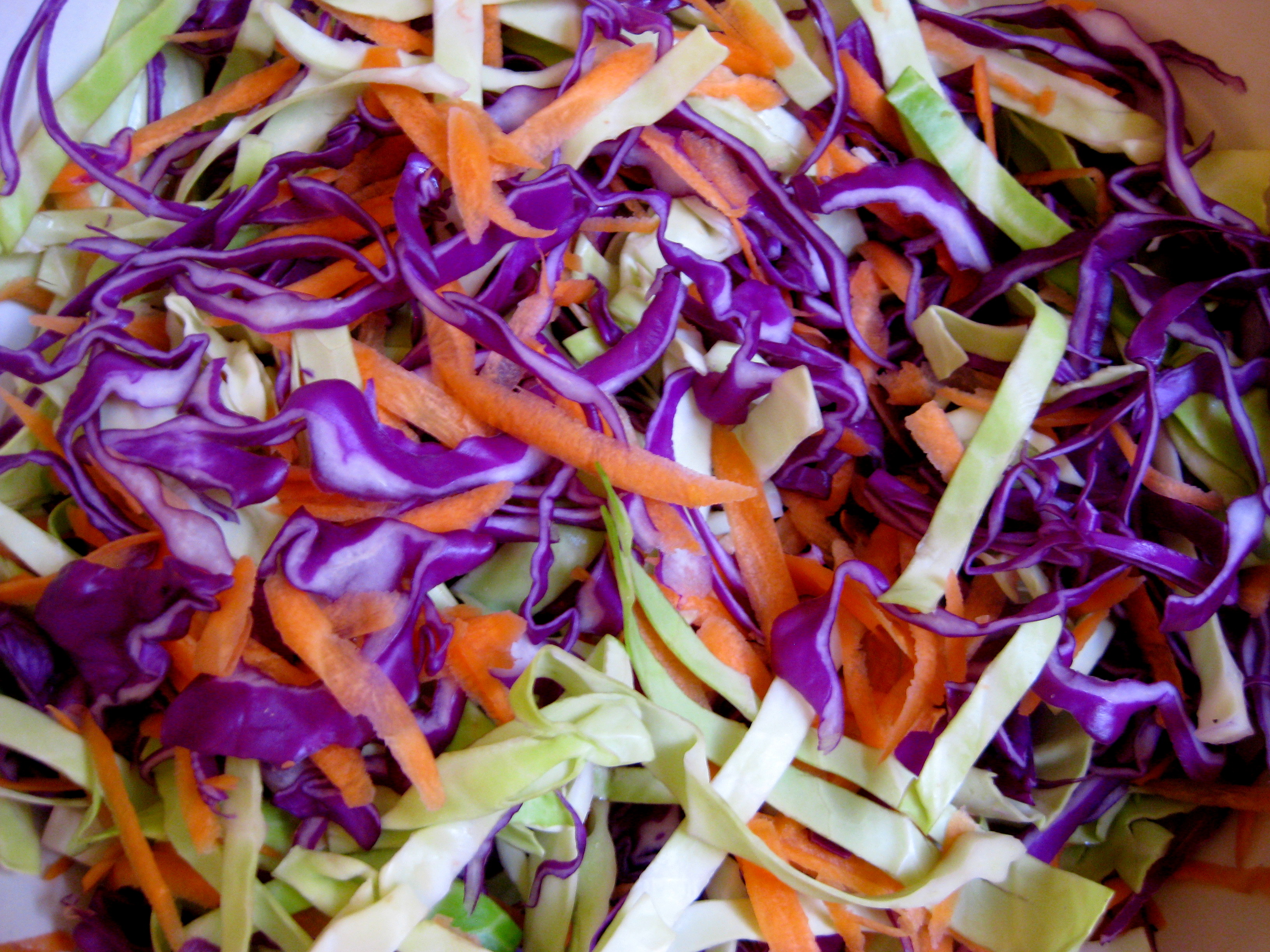
mayo-free coleslaw

You know you’re in trouble when you’re rifling through the vegetable bin on a mad search for the most photogenic carrot in the bag.
You know you need serious help when you’re rifling through the vegetable bin on a mad search for a ‘photogenic carrot’.

I get the feeling that it’s not quite cool to love cabbage. I mean, there’s the trendy purple sprouting broccoli, showy rainbow collards and the ultra-chic kale, but you don’t really hear about artisanal cabbages, do you? And that’s a little sad. It always strikes me as somewhat underappreciated and overlooked; a steady and consistent performer, but hardly ever invited to be the star of the show.

Except, of course, in coleslaw.

Coleslaw is one of those mad concoctions that has the rather unexpected capacity to blow your culinary socks off. It’s a riot of colours and textures, a positive festival of flavours. Homemade coleslaw is a world away from its commercial counterpart, which tends to be a damp and colourless collection of mystery vegetables swimming in a sort of mayonnaise soup. If you have the chance, it’s worth the extra effort.

Mayo-free healthy coleslaw
It’s time to celebrate the humble cabbage, don’t you think?

Since it’s so often served with meat (like the weekend’s pulled pork), I think it particularly important that it be able cut through that rich density with a bright, crisp zingyness.

This mayo-free coleslaw is all zesty freshness and isn’t remotely heavy. You can serve it as a traditional side dish, but in my opinion it also stands on its own as a delicately balanced, intensely crunchy salad.

Mayo-free coleslaw
For the slaw:
4 x spring cabbage leaves, finely sliced into ribbons (you can use a quarter of a white cabbage if you prefer)
Quarter red cabbage, finely sliced into ribbons
Half a red onion, very finely sliced
1 carrot, grated
Juice of half a lemon

For the dressing:
4 tbsp olive oil
Juice of a whole lemon
1 tbsp honey
Half tbsp wholegrain mustard

To take the punch out of the onion, squeeze half a lemon over it and leave it to soak as you get on with the other ingredients. You can skip this bit if you’re fond of the taste.

In a large bowl, toss all your salad ingredients.

In a separate bowl, whisk the salad dressing ingredients together (you can also shake in a jar). The juice output of lemons varies, but you’ll know when you’ve got it right because it will form a light, citrusy emulsion. Season with a pinch of salt, or to taste.

Pour the dressing over the coleslaw and mix well. I tend to like mixing it ahead of time so the cabbage has time to lose a little of its rawness. The dressed or naked salad keeps well overnight.

spring pasta

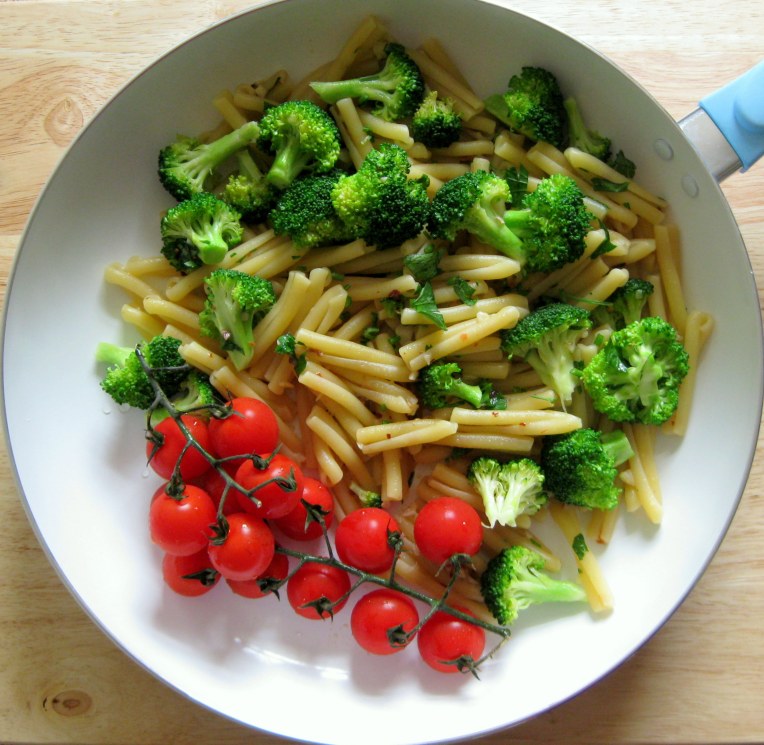
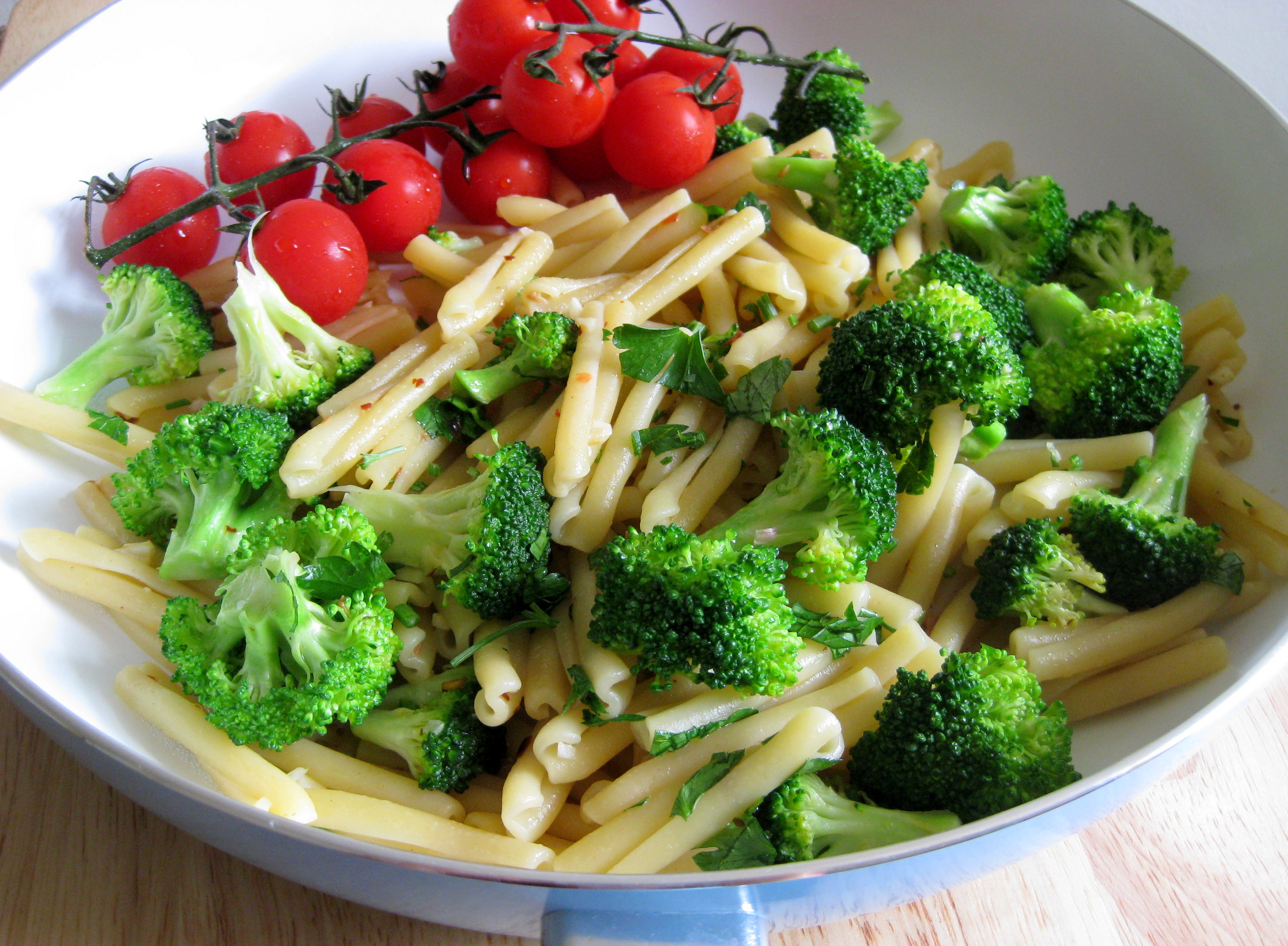
Pasta with broccoli - the perfect spring supper.
Pasta with broccoli – the perfect spring supper.

This week I celebrated the arrival of my new baby: a beautiful, pristine Cambridge-blue ceramic pan.

Yes, I’m aware this is a little strange. Most people celebrate the arrival of actual children, of Spring, of parcels and packages and Christmas and birthdays. But those of you who understand the excitement associated with a new kitchen accessory – its perfect white ceramic surface gleaming up at you – you’re my kindred spirits. We’ll be completely mad together.

The colour makes me think of spring, which is fitting because it’s growing ever so slightly warmer in London – by which I mean you can now leave the scarf, hat and gloves at home and just go out with a coat and umbrella. Every day I throw open the curtains and peer eagerly up at the sky, just waiting for the moment I can put away the Vitamin D tablets and bask in the sunshine.

It’s just around the corner. I can feel it.

Pasta with broccoli, garlic and chilli.

Broccoli with pasta is traditional to the south of Italy. This light, simple dish is bright enough to celebrate the imminent arrival of sunshine and filling enough to stave off the last of the winter blues, and it always makes me think of the outdoors and lazy days full of wine and laughter. I love the juicy burst of fresh tomatoes and the crunchy zing of parsley, combined with the dense bite of pasta and the gentle heat of garlic and chilli.

For me, this is the perfect spring supper.

Pasta with broccoli, garlic and chilli
250g short pasta
1 small head of broccoli, cut into small florets
5 cloves garlic, diced
½ teaspoon Chiu Chow chilli oil (you can use chilli flakes)
3-4 sprigs parsley, chopped
10 cherry or baby plum tomatoes

Cook the pasta in salted water until firm but not hard.

Three minutes before the pasta finishes, add the broccoli to the pot.

Reserve 1 cup of the cooking liquid and drain the pasta and broccoli.

In a frying pan over a medium heat, add the garlic in some oil and heat for around 30 seconds, taking care not to let it burn.

Add the chilli and fry for another 15 seconds, then add half the reserved liquid to the frypan. Turn the heat up so it bubbles.

Add the pasta/broccoli and heat through. If it becomes too dry, add more of the cooking liquid so it forms a creamy sauce.

Top with parsley and serve with cherry tomatoes.

anzac biscuits

The Anzac biscuit - a national culinary treasure.
The Anzac biscuit – a national culinary treasure.

Anzac Day marks the anniversary of the battle at Gallipoli during the First World War, where many soldiers died during the campaign to capture Constantinople. It is said that Australia’s national identity, the ‘Anzac spirit’, was forged during that brutal campaign – a defining moment for a relatively new nation. It is a day of solemnity where we think about our troops, the fallen and the sacrifices they and their families have made to keep us safe.

Naturally, we also commemorate the day with biscuits.

Crunchy and chewy and golden and delicious.

It might seem strange that a day that inspires so much thoughtfulness, sadness and gratitude in Aussies should be accompanied by something as irreverent as a biscuit – but in some ways, there’s nothing more fitting.

Made with rolled oats, flour, coconut and golden syrup (and egg-free to ensure no spoilage on the long journey to the troops), Anzac biscuits are a national culinary symbol right up there with lamingtons and Tim Tams.

Oh, and you can’t call an Anzac biscuit a cookie. We’re a little touchy about that.

Fresh from the oven
Fresh from the oven

Wholemeal flour works really well in this recipe because the biscuits are already grainy and slightly nutty, so I substituted the whole lot. Rumour has it that you can actually make quite a few substitutions without affecting the final taste too much, but for the original crunchy-on-the-outside, slightly-chewy-on-the-inside biscuits I love this recipe.

Anzac biscuits (makes 24)
2 cups rolled oats
1 cup wholemeal flour
²⁄3 cup (150g) caster sugar
¾ cup (60g) desiccated coconut
¹⁄3 cup golden syrup
125g unsalted butter
1 teaspoon baking soda
2 tablespoons hot water

Mix the oats, flour, sugar and coconut together in a large bowl.

Place the butter and golden syrup over a low heat until melted.

Mix the baking soda with the hot water and then add to the butter/syrup mixture. It will froth up.

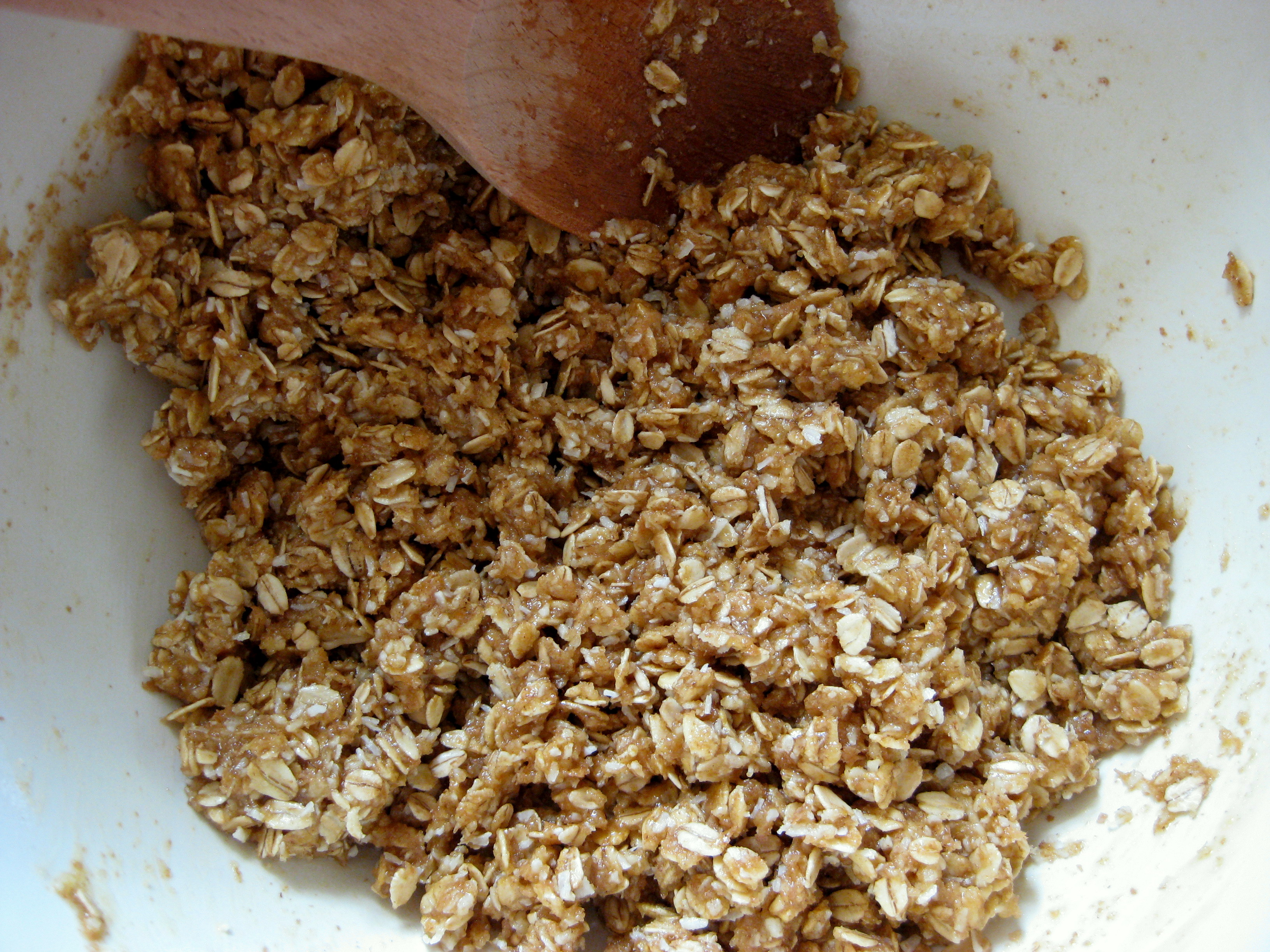
Pour this into the dry ingredients and mix well.

Oats are delicious!
Oats are delicious!

Shape into flat discs of about 5cm across – they spread quite far, so you need to give them a lot of room on the baking sheet.

Bake at 165 degrees celcius for around 10 minutes, until golden. They’ll come out soft, but let them cool for five minutes on the tray before transferring them to a wire rack and they’ll crisp up nicely.

chocolate chip hot cross buns

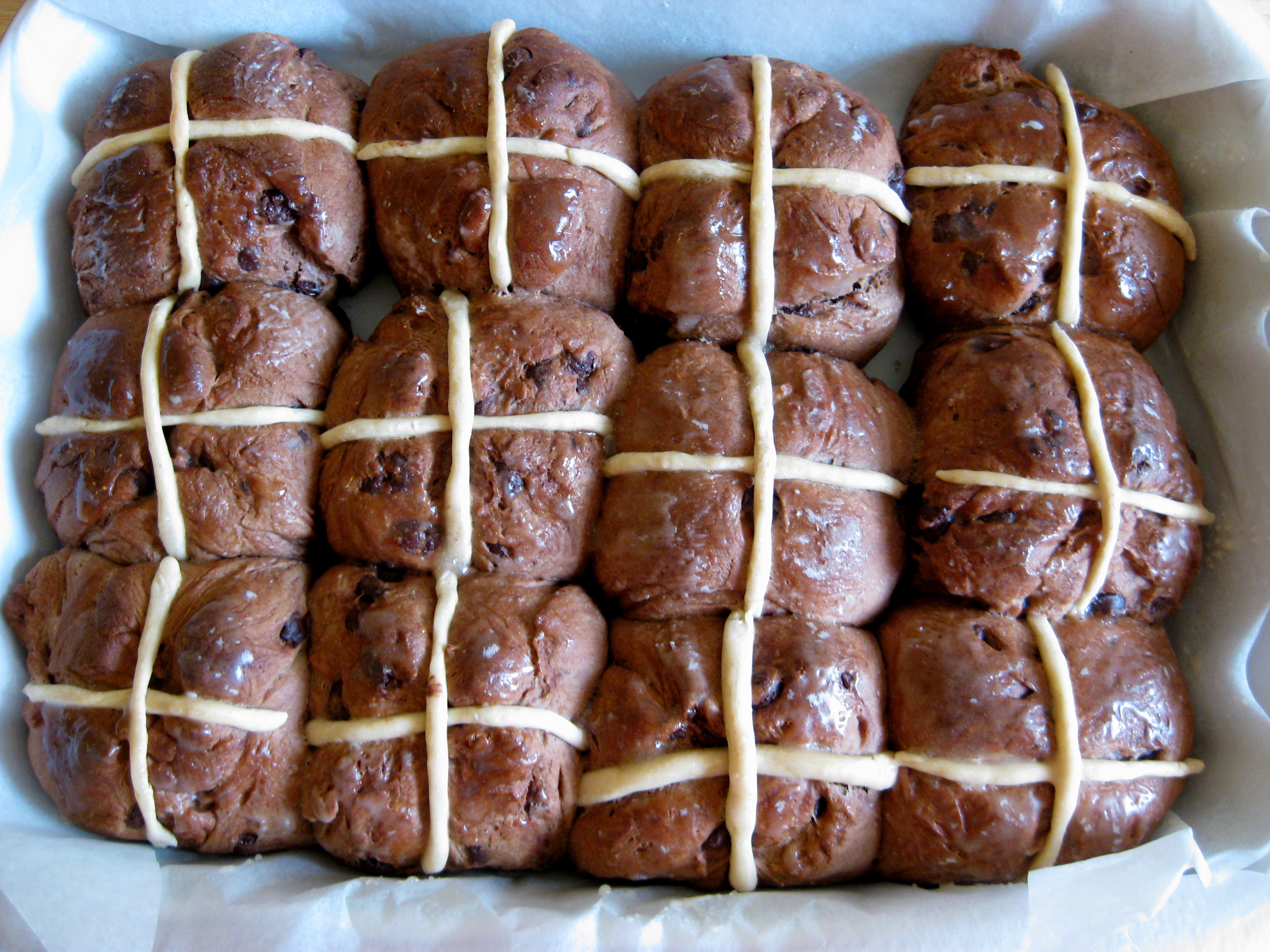
A delightful little Easter treat.

It’s the end of the Lenten season, which always means hot cross buns.

When I was little, I liked the delicately spiced buns, but hated the sickly sweet hit of the raisins and currants. It would take me ages to eat one because I would have to pull it apart, picking out the fruit and eating the bread. Occasionally I would get impatient and try to eat too much at once, accidentally biting into a fat, disturbingly squishy saccharine pod or a slightly bitter piece of peel. I would have given up on them altogether, but there’s something very festive and special about the scent of a warm hot cross bun wafting through the house.

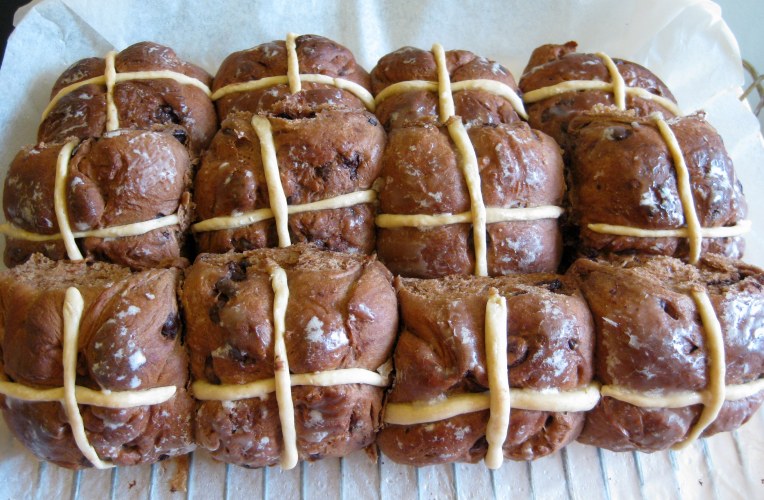
Chocolate chip hot cross buns: all fun, no fruity fuss.

It was a glorious day when Baker’s Delight introduced chocolate chip hot cross buns. To me, it’s the ideal substitute since the cinnamon and chocolate go together perfectly and there’s no unexpected fruit bombs going off where they shouldn’t be.

I’m completely new to making bread, which always makes for a few nerves. I tried my best to tinker with recipes, playing with wholemeal ratios, types of sugar and quantities of butter in an effort to make them healthier, but eventually I found that it’s best not to mess too much with hot cross buns – you just won’t get the same experience. Maybe someday I’ll be comfortable enough with baking to perfect a recipe for wholemeal low-sugar butter-free hot cross buns, but for now I’m going to sit back and enjoy a sweet treat.

Happy Easter!

For who can resist a hot cross bun, still warm from the oven?

Chocolate chip hot cross buns (makes 12)
For the buns:
1 tablespoon dried yeast
2 tablespoons of honey
100ml warm water
100ml warm milk
450g plain flour
2 teaspoons mixed spice
2 teaspoons ground cinnamon
1 teaspoon salt
50g caster sugar
1 egg
50g melted butter
200g dark chocolate chips
For the crosses:
50g flour
3 tablespoons water
1 teaspoon vanilla extract (optional)
For the glaze:
2 tablespoons sugar
2 tablepoons water

Dissolve the honey in 100ml hot water and 50ml milk. Make sure the liquid is comfortably hot and add the yeast, covering it with a clean tea towel. Leave for 5 minutes until it forms a good froth on the surface.

Meanwhile, sift the flour, sugar, salt, spices and chocolate chips together in a large bowl and make a well in the centre.

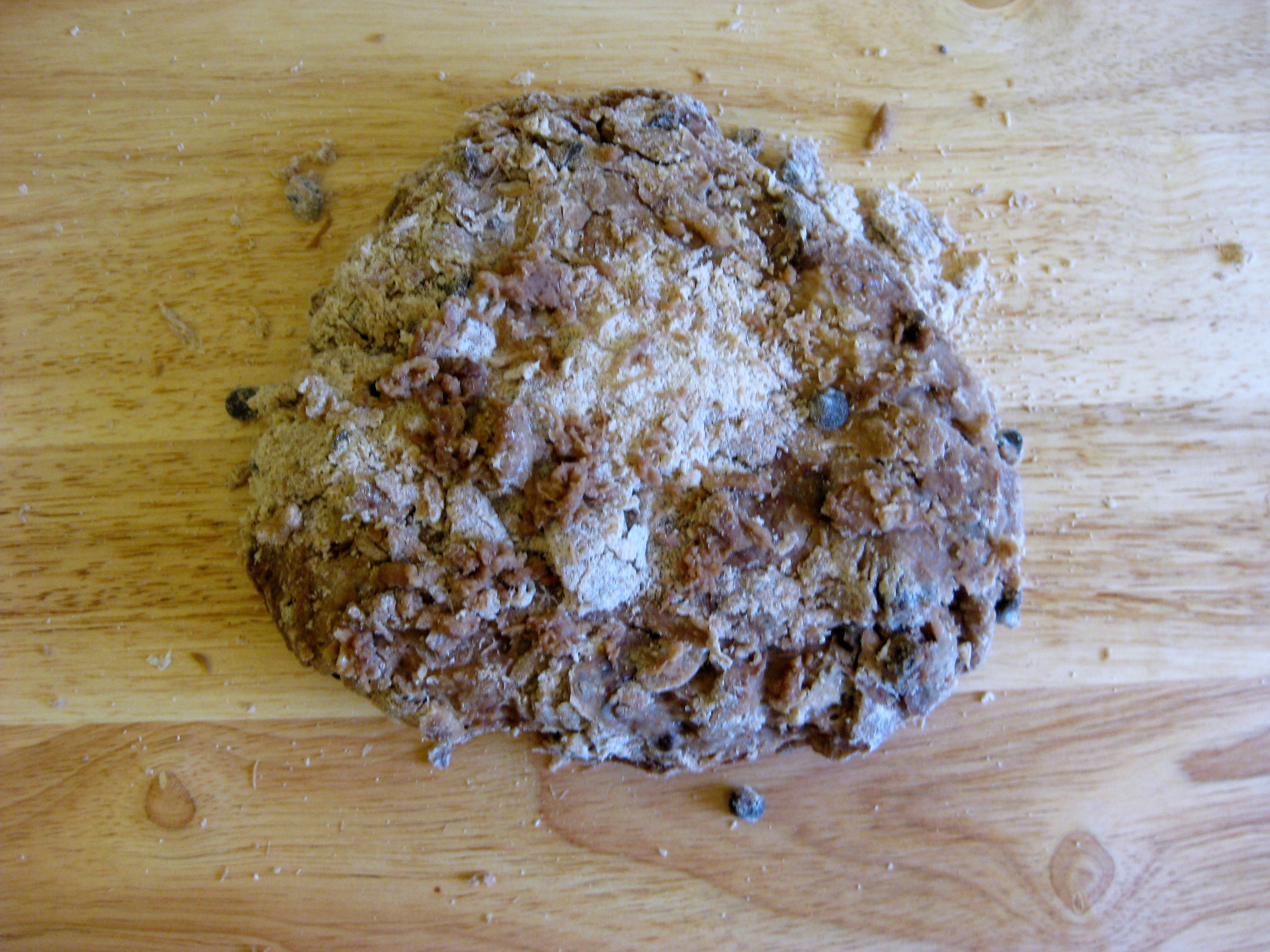
When the yeast mix is ready, pour it into the well with the egg, melted butter and 50ml of warm milk. Mix gradually until it forms a rough dough, then turn it out onto a clean surface.

The rough dough
The rough dough

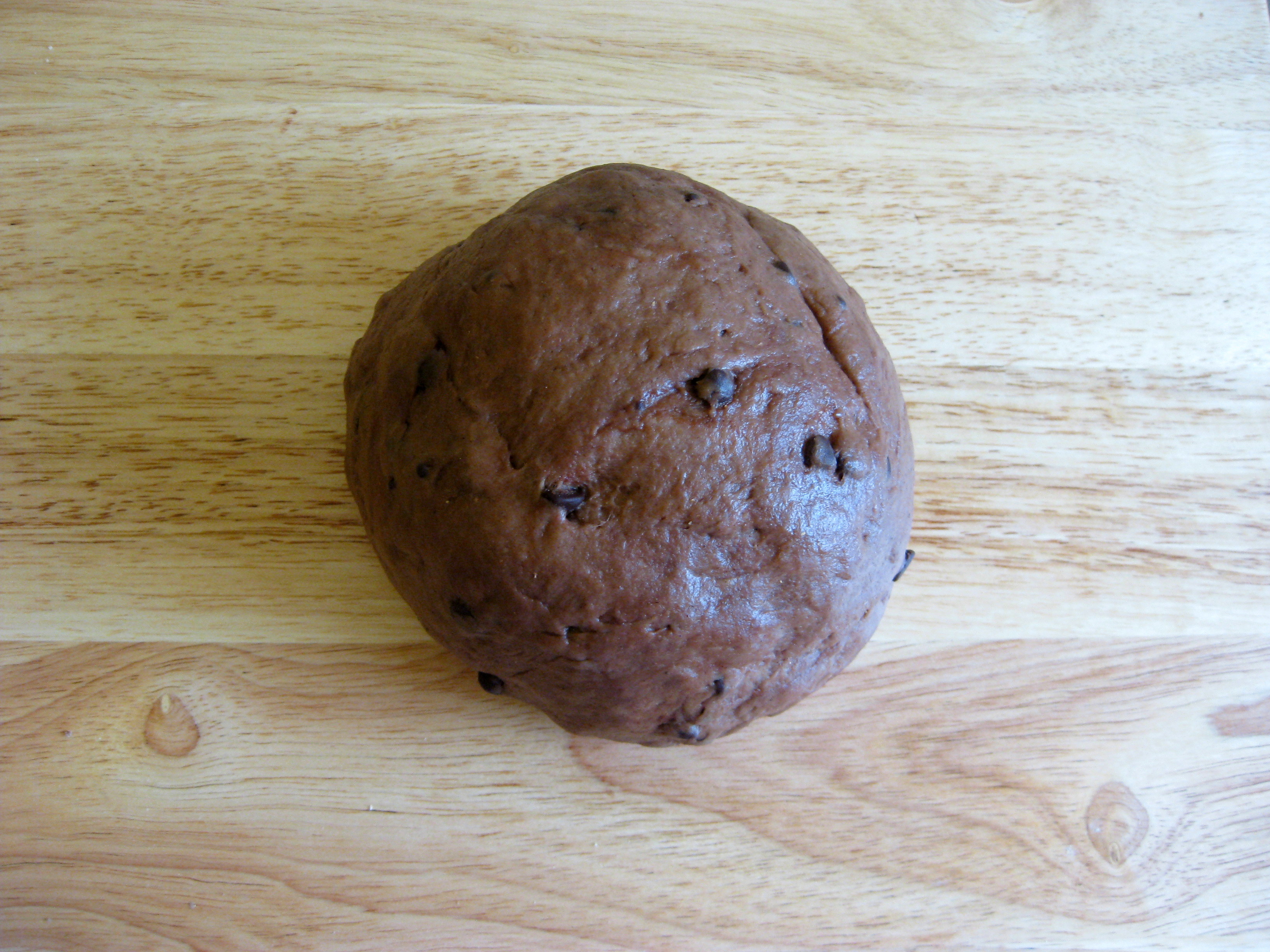
Knead for about 7 minutes or until it is smooth and elastic.

Watching dough come together is kind of magical.
Watching dough come together is kind of amazing.

Place the dough into a lightly oiled bowl and cover with a cloth, leaving it in a warm spot in the kitchen. Leave until it doubles in size (takes about an hour).

Take the dough and knead it back to its original size, then cut it into 12 balls. Score the tops in the shape of a cross and place into a deep baking tray lined with baking parchment. Cover and leave for 25 minutes.

Meanwhile, make the crosses by mixing the flour with the water and vanilla. Roll into strips and attach to the top of the balls by wetting them slightly.

Bake at 190 degrees for 20 minutes.

Just before you pull them out of the oven, you can make the glaze by gently heating the sugar and water until it forms a syrup. Brush the buns with the glaze while they’re still warm.