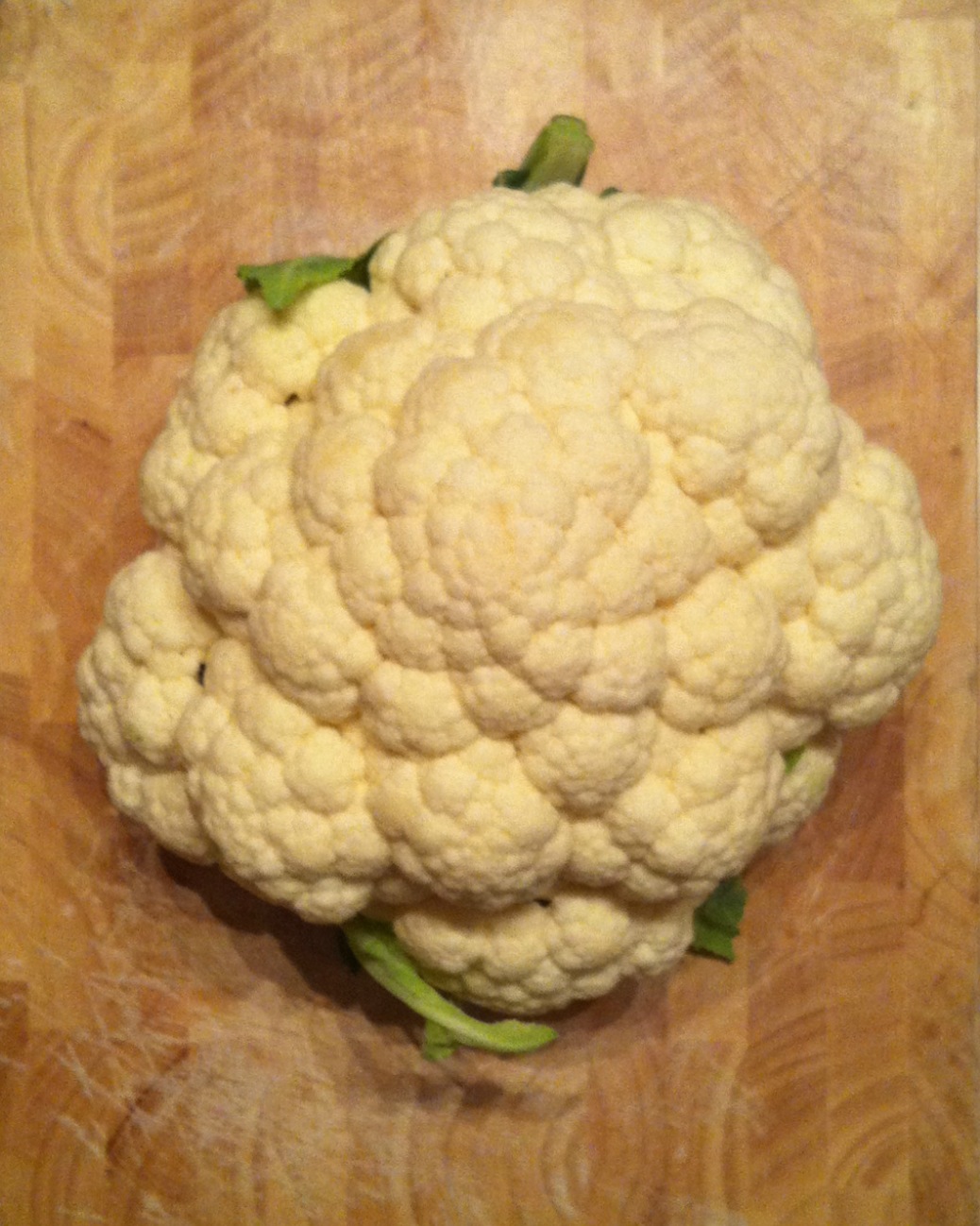
cauliflower mash

The ‘before’ picture.

Don’t worry, I haven’t completely lost the plot. I know this is a perfectly ordinary cauliflower sitting here and I know I might be cheating ever-so-slightly by giving you a recipe for essentially taking it and turning it into mush. But it is nevertheless a staple in this tiny kitchen, and it’s hard to get right, so here goes.

Cauliflower mash
1 large head of cauliflower

Cut the cauliflower into pieces. One of the best things about this is that since the cauliflower is going to be mashed, you don’t need to waste time agonising over cutting the thing into florets of the same size so they’ll cook at the same speed (does anyone else do that, or is it just me?).

Boil the cauliflower in a large saucepan. Normally, you’d try to take cauliflower to a stage of perfect toothsomeness, just the same way you’re searching for al dente pasta. For mash, you want to take it beyond that point, to where a fork can split the floret with a touch.

Drain the cauliflower and return it to the saucepan. Roll up your sleeves, grab the potato masher, and work through the frustrations of the day.

If you were to serve it now, it would be tasty, but wet and sloppy. Since I often use this as a substitute for potato, I prefer a lighter, fluffier mash. What you want to do is remove the liquid that has come out of the cauliflower, and the best way to do this is by evaporation. Draining, sadly, won’t cut it.

Once you’ve mashed the cauliflower, return it to the stove and place over a low heat. You need to leave it steaming gently over the stove for a good ten minutes. You don’t really need to worry about looking after it – cauliflower shouldn’t burn or stick to the pan – but give it a stir every now and then to check how much liquid is left. The end result should be light and fluffy, ready for use as a delicious alternative to mashed potato.

And… after.


*If you’re looking for a variation that holds together better and has the consistency of mash, try this gourmet cauliflower mash.
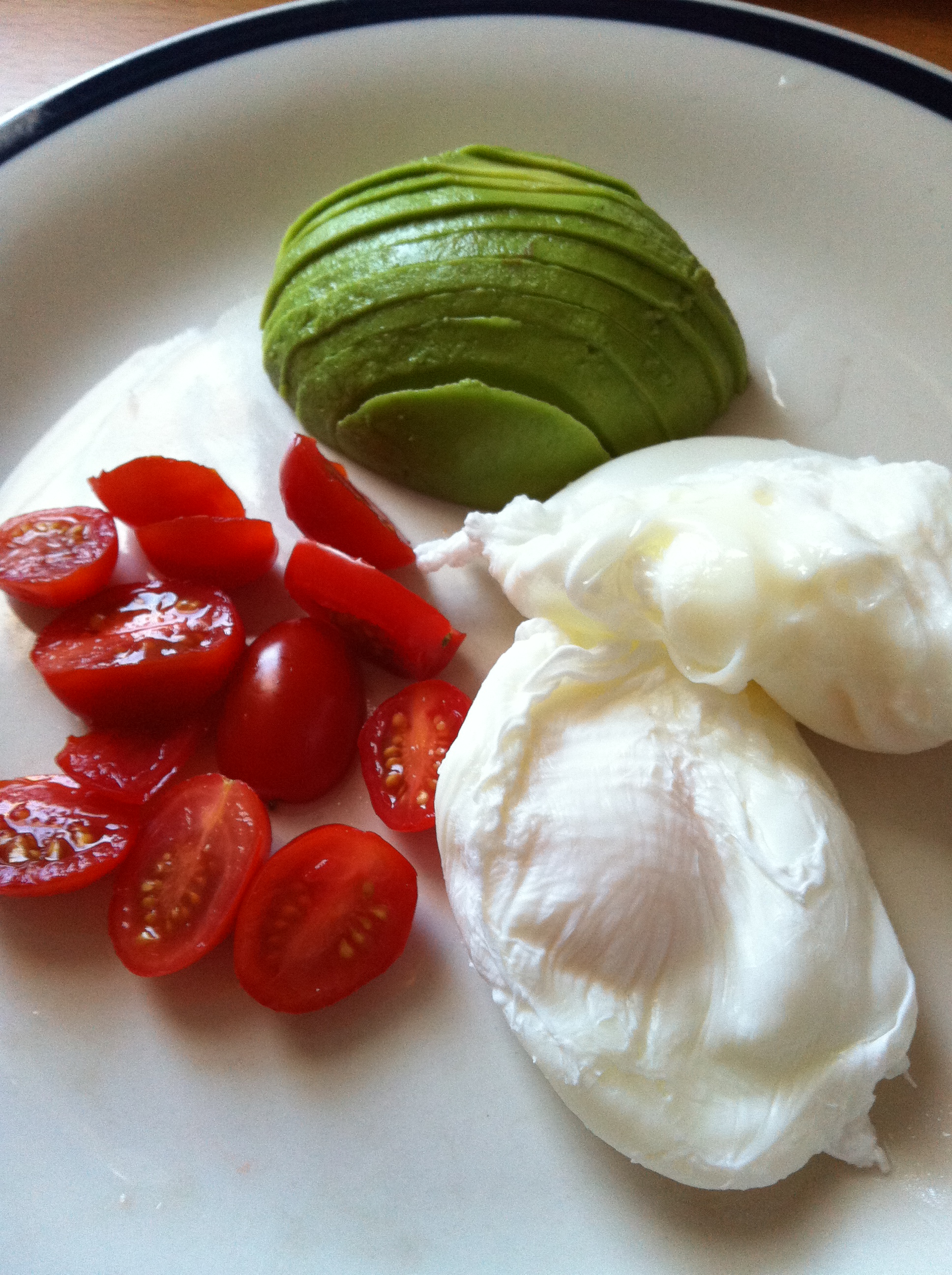
perfect poachies

Breakfast: one of the three most imporant meals of the day.

There’s something very special about poaching. I think it’s mainly because it’s such a precarious process and one we generally prefer to leave to cafes with experience in that kind of thing. After all, it involves breaching the protective barrier of the shell and expecting the whites to hold together and surround the yolk in an aesthetically-pleasing fashion while you simmer it in a pan of hot water – honestly, we don’t expect much, do we?

I’m not going to get holier-than-thou about free range eggs, because it’s not as if I haven’t bowed to cost pressures and bought cage eggs before. But for poachies, there is simply no alternative. You have to use the free range kind, which have better shells so they’re less likely to explode in the pan when you boil them. They also tend to be larger, more flavoursome and upon consuming them, you achieve a nice halo effect that only comes with doing the humane thing and being able to feel virtuous about it.

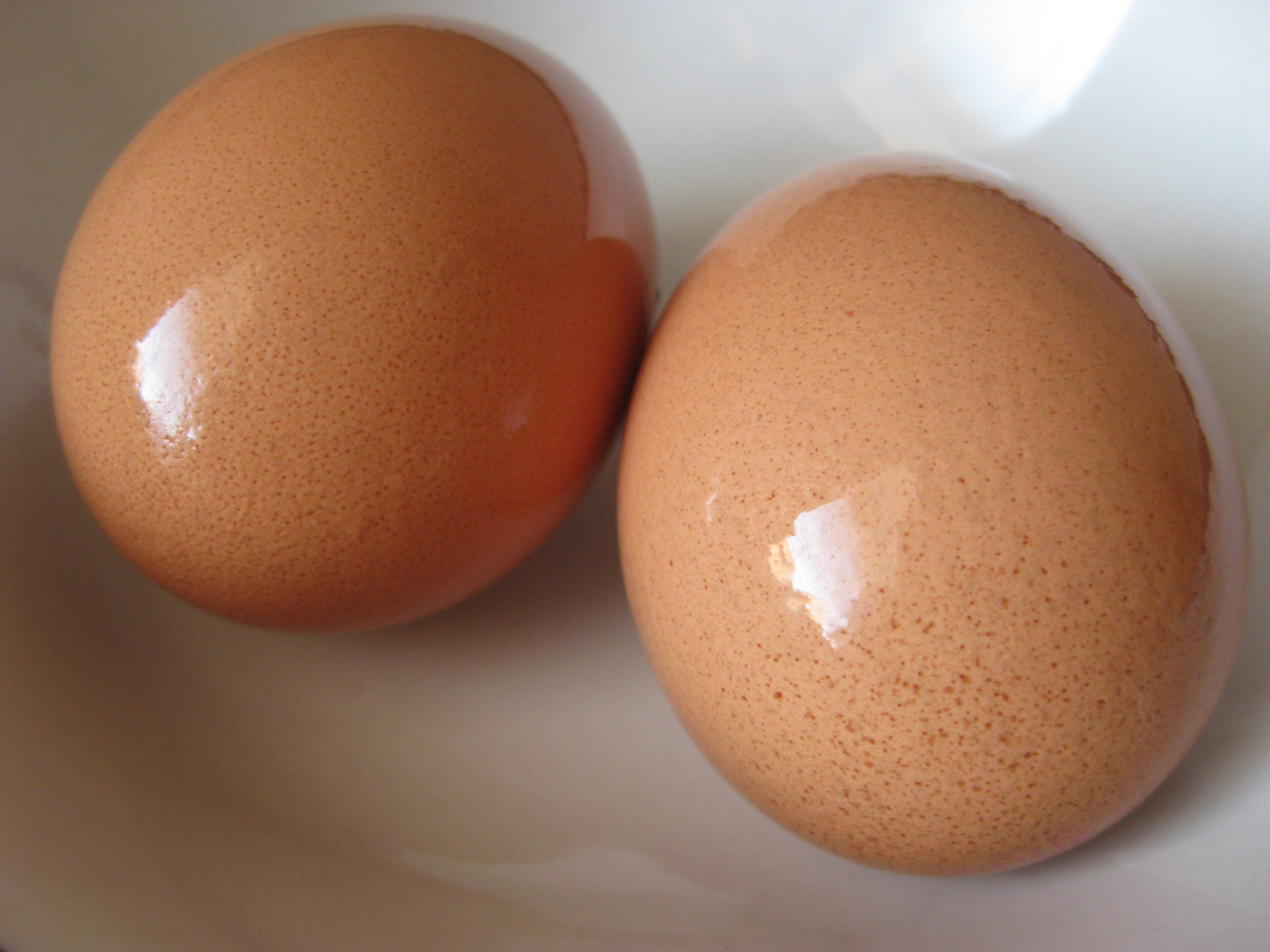
Little beauties. Aren’t you gorgeous?

The other non-negotiable factor is the freshness of the egg. If you don’t have super fresh eggs – they’re not always easy to get in London – you should consider scrambling, frying, hard-boiling or half-boiling your little loved ones. Either that, or lower your expectations. The albumen in fresh eggs clings to the yolk better and will help you to achieve that nice ‘whole egg’ look. Once they’re a few days old, it begins to pull away and it makes it difficult to keep the team together.

Poached Eggs
2 large free-range eggs
Vinegar

Half-fill a pan with water and bring to a low boil. Add a splash of vinegar – don’t worry, you won’t be able to taste it. It just helps the shells not to crack when you boil eggs (incidentally, if you’re hard-boiling, the vinegar will stop the shells from splitting and leaking egg white into the pan).

Using a slotted spoon, gently lower the two eggs into the pan. Boil for 20 seconds and rescue.

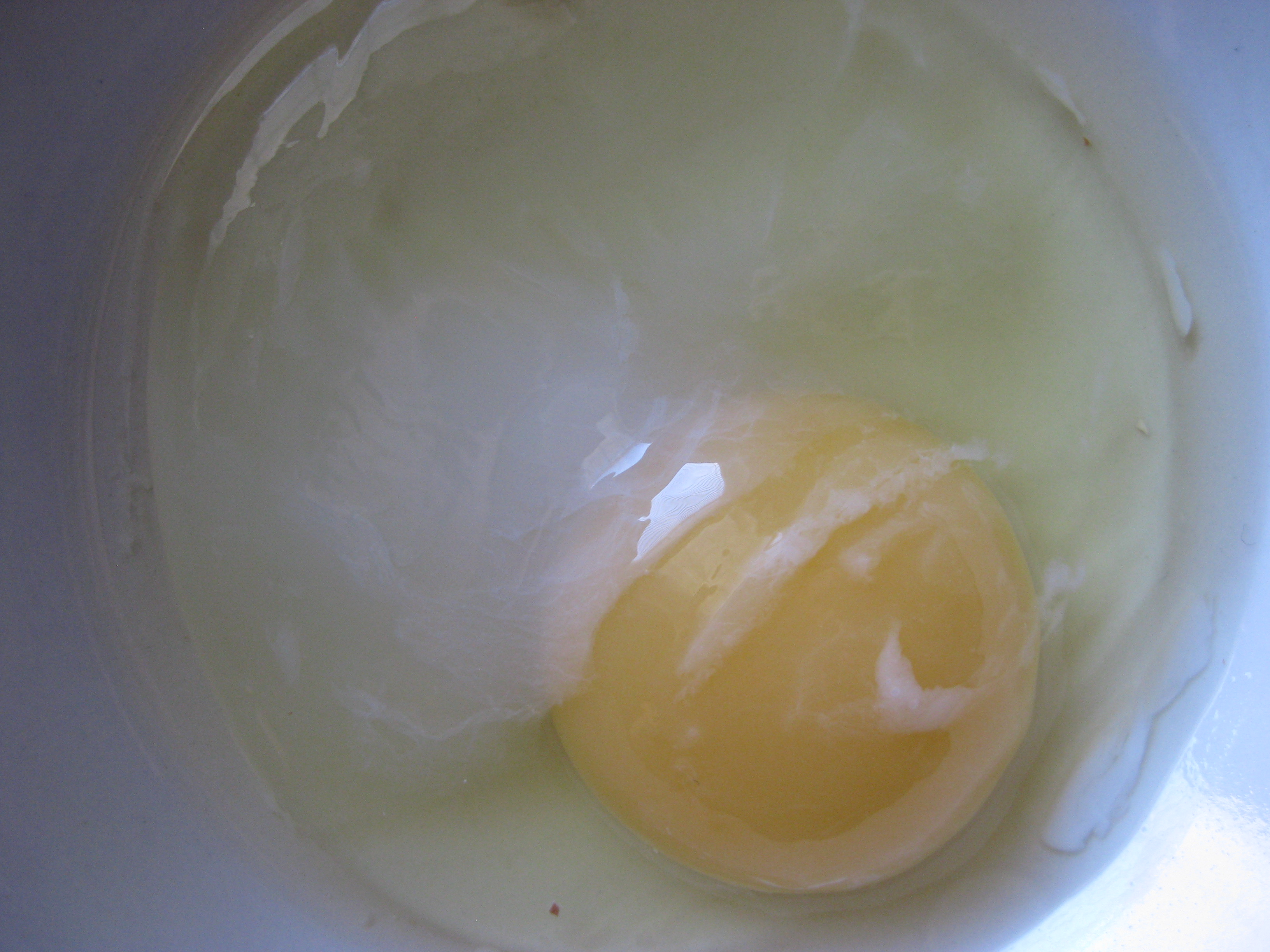
Using a fork to split the shell, break one egg into a shallow dish. The white should just have begun to take on a translucent sheen.

Being an egg ain’t all it’s cracked up to be.

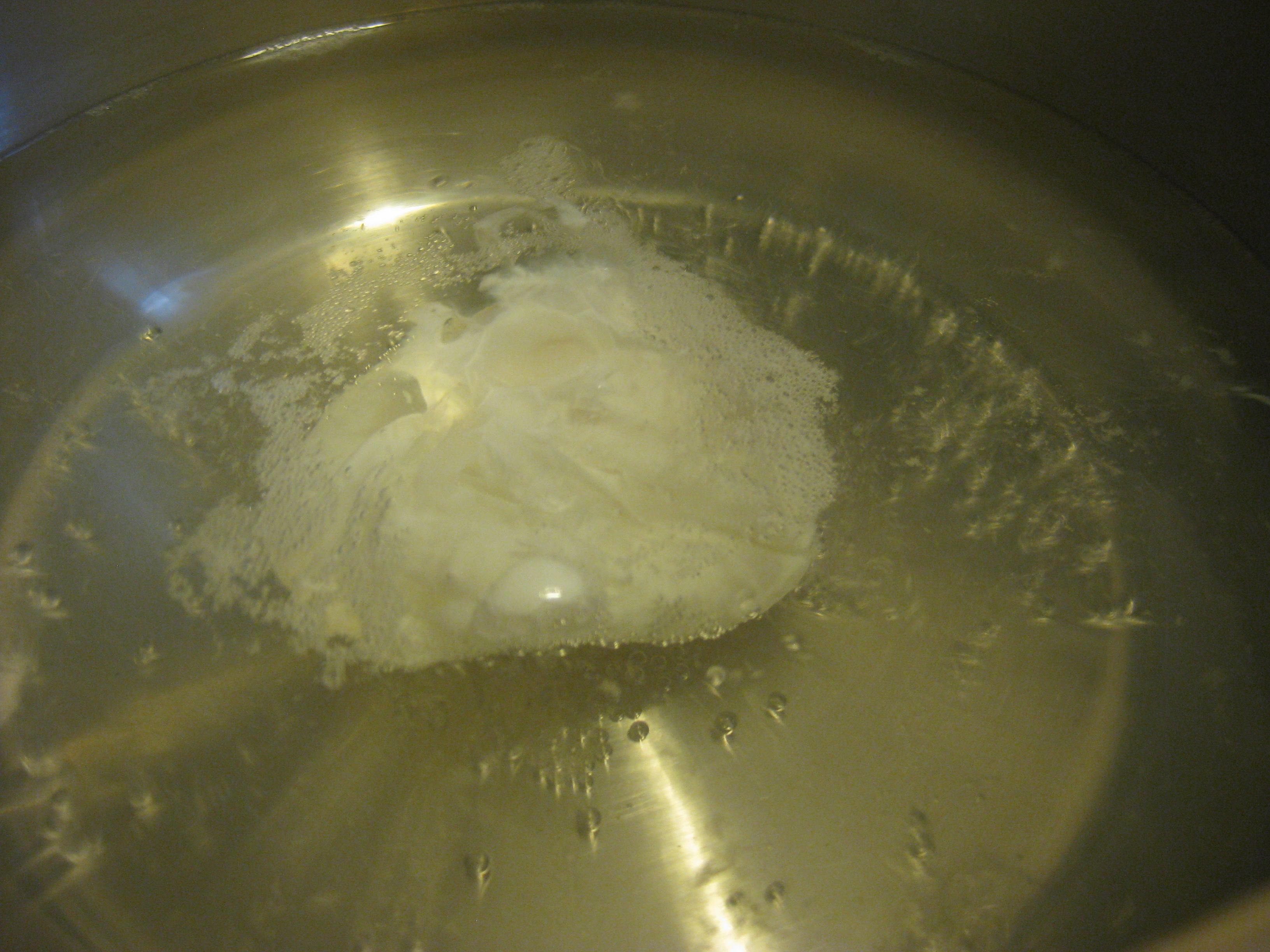
Make sure the water is on a low simmer – steam should be rising from the pan, but the water shouldn’t be moving very much. An occasional bubble is good. Hold the dish over the water and gently slip the egg into the pan. The way it falls is the way it sets, so be careful!

In a perfect world, every egg would poach like this.

A soft-poached egg takes approximately 2-3 minutes. If your pan is large enough and your egg seems to be holding it together nicely, do the other egg on the other side of the pan. Otherwise, cook your egg for 2 minutes and place into iced water to stop the cooking process while you take care of the other eggs. Before serving, dip it into hot water for 30 seconds.

And hey, don’t worry so much if your egg whites run everywhere. If it’s just for you, nobody will know – and if you’re cooking for other people, they’re probably just happy they’re not the ones at the stove.

not tabouleh

THIS IS NOT TABOULEH.

I’ve got to say that before all my Lebanese friends come after me, pelting me with falafels (which I maybe wouldn’t mind as much as I should). Real tabouleh is made with parsley, bulgur wheat, lemon juice, spring onion and mint. Calling this tabouleh would be like saying sushi is Chinese because it’s made with rice. Big no-no.

But as potentially culturally offensive as this little salad is, the ingredients were what I had in the fridge when I came home at about 8pm after a day of hardcore shopping and I certainly was not about to traipse out to get anything else. I very nearly reached for the pasta and sauce, but I didn’t, and I’m glad. This dish tastes wonderful – zingy and fresh and healthy – so I’m going to post it here for you to enjoy under the proviso that you all understand that calling it tabouleh would be a mistake, a misrepresentation, an egregious error.

The Not-Tabouleh Salad
Bunch of parsley, chopped
Two tomatoes, finely chopped
Quarter of a red onion, very finely chopped
3 tbsp of couscous
Juice of one lime
Olive oil

Parsley is wonderfully springy and robust, but the key is to get it as dry as humanly possible before chopping it, otherwise it ends up in a soggy mess. You can just use paper towels to pat the leaves after you’ve washed it. I know people who use a salad spinner to get it really dry before chopping it, which is great but a little Mission Impossible for the small kitchen.

When chopping parsley, grab the stalks and chop from the leaves down. Get it right the first time because the ‘running the knife through again’ technique that I often use to make things are properly chopped doesn’t really fly with parsley – you can end up bruising the leaves and they get soggy. In any case, don’t fret if there are one or two leaves sticking out at the end. Make sure you’ve chopped enough that the parsley salad is really about the parsley, not the couscous.

Combine the parsley, couscous, tomato and onion (I’m not wild about raw onion, so I only used a quarter, but use your judgement). I don’t like lashings of olive oil dripping everywhere so I used just the tiniest drizzle and then squeezed the lime juice over. Mix well and serve by itself, or with romaine lettuce leaves.

I may have also helped myself to the world’s largest scoop of hummus. Why not?

simple salsa

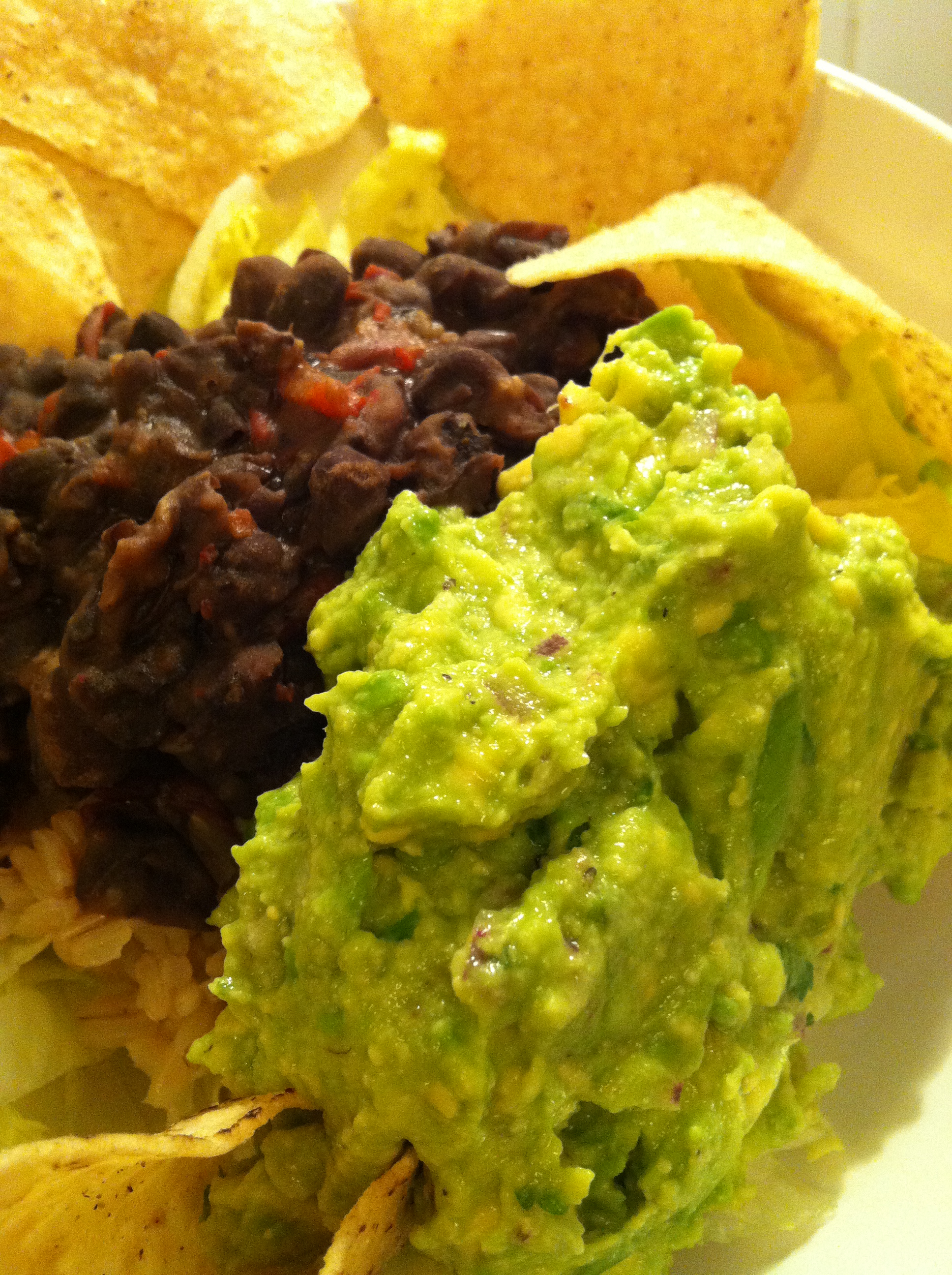
Those of you who are quick on the uptake (or just really passionate about food) have probably spotted the glaring problem with the photo on my guacamole entry.
Salsa, of course! It’s not there!

I had committed the culinary equivalent of placing Romeo without Juliet, Mickey without Minnie, Abelard without Heloise (although she would have been much better off without him, in my opinion). I don’t quite know how it happened, but let’s just say that I was overcome with the excitement of learning how to make guacamole that I simply forgot about the unbroken pact between guac and salsa.

I’m going to rectify that now, because trying to have a Mexican meal without salsa just isn’t right. I won’t allow it.

Salsa
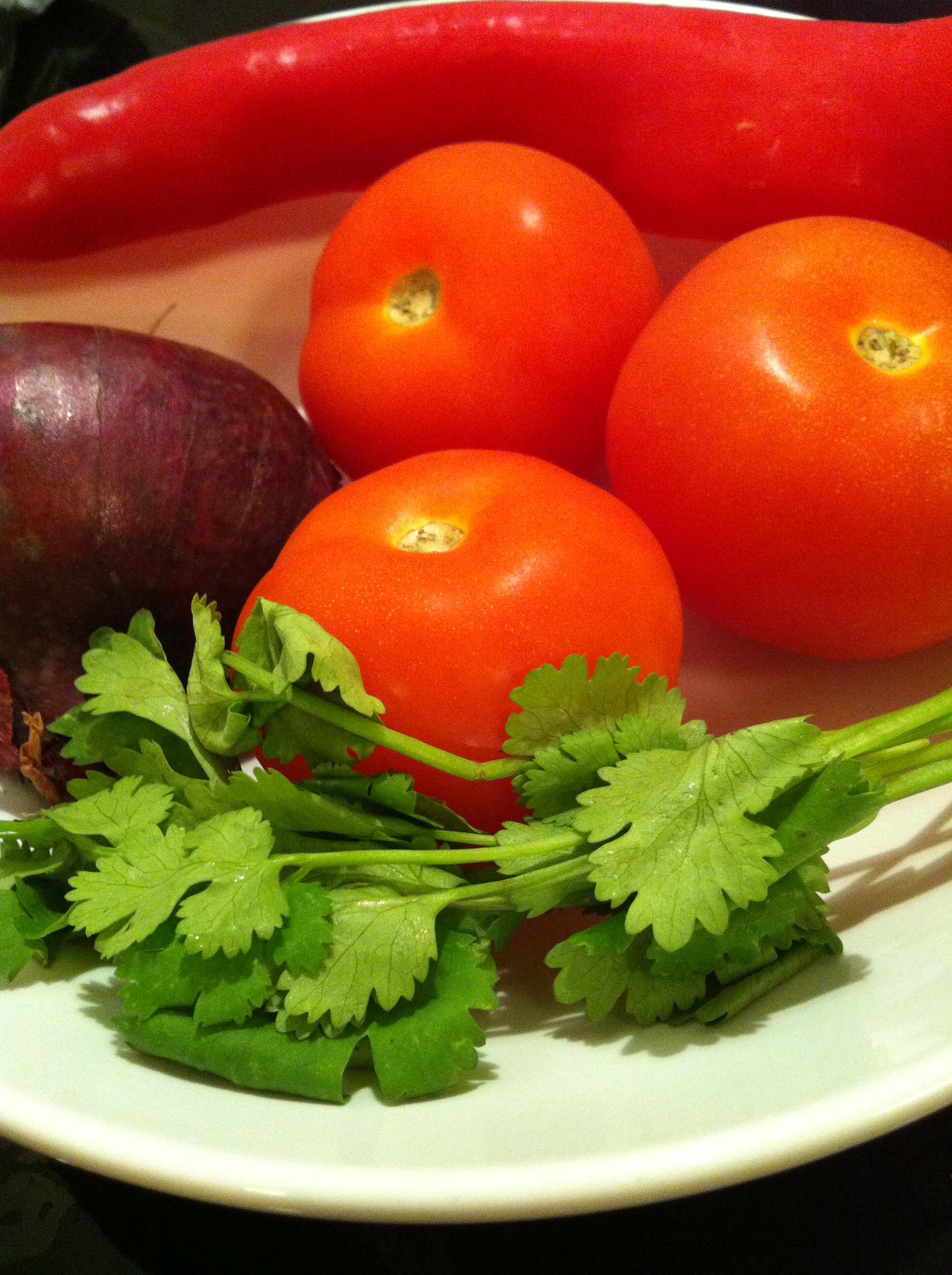
3 tomatoes
Quarter of an onion
One deseeded chilli
Small handful of fresh coriander
Salt
Squeeze of lime juice

Finely chop the tomatoes, onion, chilli and coriander. Combine in a bowl and add salt and lime juice to taste. Nothing simpler!

holy guacamole

Mexican cuisine is like the lover who sporadically makes appearances in your life and works his way back into your heart by charming you with something new and exciting each time. After a particularly long run of soups and salads and sandwiches, Mexican shows up and you vaguely consider settling down – because it has flavour, texture, heat and sweetness and crunch and comfort; everything you could possibly want in a cuisine.

It amuses me to tell you that for the longest time I didn’t like avocados. I used to scrape the guacamole off my nachos and give it to my bestie. In fact, I didn’t like avocados until I came to this country and tried guacamole at Wahaca.

Slowly, I’ve fallen in love with the creamy texture and subtle, fresh taste. Guacamole is something indescribably complex; muted creaminess balanced with the spike of raw onion, chunks of soft flesh, a sharp note of lime juice and of course the flavour kick of coriander. These days I’m drawn irrepressibly to the vivid, iridescent green whenever I’m in a Mexican restaurant.

Guacamole
3 x large ripe avocados*
Half a red onion, very finely chopped
1 lime
Small handful of coriander, finely chopped
Salt

Mince the coriander and half the onion, chopping as finely as humanly possible. If you’re lucky enough to have a mortar and pestle, use that. Otherwise, a little muscle on the chopping board will do. Place into a bowl, add a pinch of salt.
Scoop the flesh from the avocados, add to the bowl and mash with a fork. Add half the lime juice as you go.
When you’ve got a rough guacamole, add the rest of the lime and onion and mix well. Season with black pepper and more salt if necessary.

If you like, you could add additional coriander leaves, chilli or a deseeded tomato.

*It’s easy to buy avocados from Sainsbury’s or Tesco, where they’re the cheapest, but often the ‘ready to eat’ avocados are about as hard as hockey pucks or else they’re descending into that really icky soft rotten place. Press gently on the small tip and if it gives just slightly you’re in luck. Otherwise buy firm avocados a few days ahead and keep them in the fridge.